 Popular season
Guides
Language
EnglishCurrency
US dollar · $Your currency applies on GetYourGuide too.
Guide · Best time
Best time to hike Kumano Kodo, month by month
The best time to hike Kumano Kodo is spring or fall for most walkers, but the trail stays open all year. Here are the real temperatures, rain and daylight on the Nakahechi, month by month.
Check availabilityfrom $103 · cancellation is free
Editorial team, kumanokodohike.comUpdated October 22, 20266 minutes to read22 sources
Quick answer
- 01Popular seasons
- Spring and fall, says the tourism bureau.1
- 02Open all year
- The Nakahechi route is open year-round.2
- 03Wettest months
- June and July, with 387.5 and 395 mm of rain.3
- 04Coldest
- January, with an average low of -1.2 °C on the Nakahechi.3
- 05Shortest days
- December, about 9.9 hours of daylight (calculated).3
A trail that is open in every month
The tourism bureau's short answer is that the Nakahechi route is open year-round, and that spring and fall are the popular seasons on the trail.21 Winters can bring some frost and occasional snow at height, which usually melts quickly, while summers are often hot, humid and wet.1 So there is no closed season on the main route, only better and harder months.
The temperature and rain figures on this page are the official normals of the Japan Meteorological Agency's station at Kurisugawa, which stands on the Nakahechi itself, close to Takijiri-oji where most walks begin. They describe the valleys where the villages and inns lie. On the passes it is cooler and windier, and the weather changes quickly in the Kumano mountains. Day length is not a station figure: it is calculated for the latitude of Kumano Hongu Taisha.
One rule holds in every season: be ready for rain. The bureau calls the Kii Peninsula one of the wettest areas in Japan.4 Even the driest month on the chart, December, still averages 86.9 mm.3 A good rain jacket matters more than the month you choose.
The Kumano year
What each season brings
-
Late Dec to Feb
Frost possible
Cold fronts can bring freezing nights and snow.5
-
6 February
Oto Matsuri
Fire festival at Kamikura-jinja in Shingu.6
-
Spring
Popular season
Mild days and busy inns.1
-
13 to 15 April
Hongu festival
The great festival of Kumano Hongu Taisha.7
-
Summer
Hot, humid, wet
-
Fall
Popular season
Spring: March to May
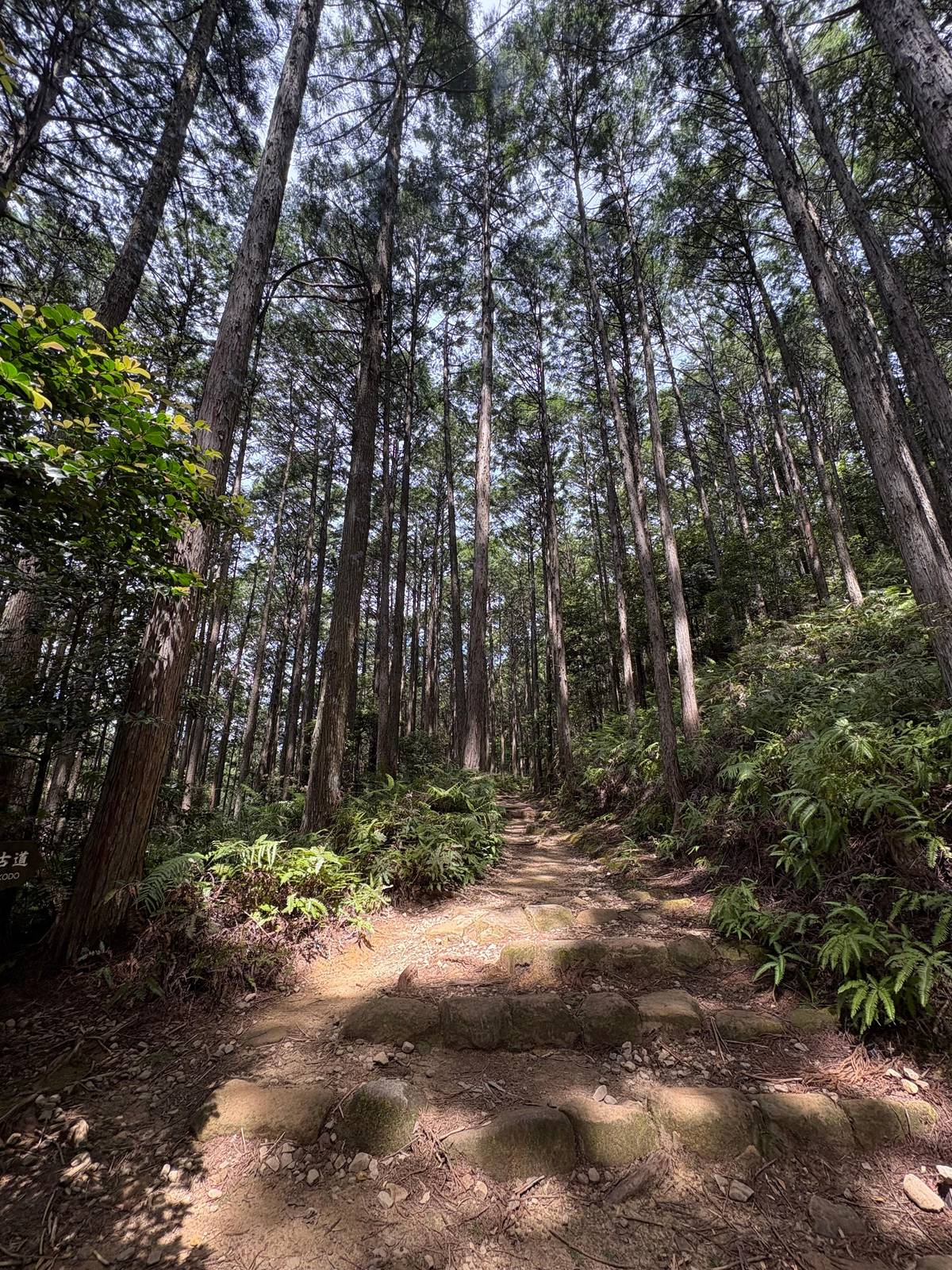
Spring is a popular season on the trail.1 At Kurisugawa the average daily high climbs from 15.2 °C in March to 24.3 °C in May, while lows rise from 2.1 °C to 11.7 °C.3 That is comfortable walking weather, cool in the mornings and warm by midday on the climbs. New green leaves fill the forest, the terraced fields in the hill villages turn bright, and the light on the ridges is clear after a rainy night.
Rain builds through the season, from 182 mm in March to 250.8 mm in May, with about 11 rainy days a month at 1 mm or more.3 Days lengthen too: April has about 13 hours of daylight at mid-month by calculation, enough for the long stages into Hongu without hurrying.3
April brings the biggest festival at Kumano Hongu Taisha, held from 13 to 15 April every year.7 It is a wonderful time to be in Hongu, but inns fill up, and the bureau warns that buses can be crowded or full in the peak spring and fall seasons.11 Book early if your dates fall around it.
Month by month
Hours without sun and rainy days through the year
Hours without sunDays with precipitationSeason
Climate table
Temperature, rain and day length by month
| Month | Daylight (h) | Darkness (h) | High / low | Wet days | On the trail |
|---|---|---|---|---|---|
| Jan | 10.1 | 13.9 | 11 / -1 °C | 8 | Frost possible |
| Feb | 11 | 13 | 12 / -1 °C | 8 | Frost possible |
| Mar | 11.9 | 12.1 | 15 / 2 °C | 11 | Popular season |
| Apr | 13 | 11 | 20 / 7 °C | 11 | Popular season |
| May | 13.9 | 10.1 | 24 / 12 °C | 11 | Popular season |
| Jun | 14.4 | 9.6 | 27 / 17 °C | 15 | Hot, humid, wet |
| Jul | 14.2 | 9.8 | 30 / 21 °C | 13 | Hot, humid, wet |
| Aug | 13.5 | 10.5 | 32 / 22 °C | 12 | Hot, humid, wet |
| Sep | 12.4 | 11.6 | 29 / 18 °C | 12 | Popular season |
| Oct | 11.4 | 12.6 | 24 / 12 °C | 10 | Popular season |
| Nov | 10.4 | 13.6 | 19 / 6 °C | 8 | Popular season |
| Dec | 9.9 | 14.1 | 13 / 1 °C | 7 | Frost possible |
Mean daily maximum and minimum and rainy days counted from 1 mm are Japan Meteorological Agency normals, 1991 to 2020; the mid-month day length is our own calculation.3 Season according to Tanabe City Kumano Tourism Bureau.2
Decision helper
Which months fit your trip?
Start from what you care about most
April, May, October
Average highs of 20.1 to 24.3 °C at Kurisugawa.3
December or January
Averages of 86.9 and 91.9 mm of rain a month at Kurisugawa.3
May to July
About 13.9 to 14.4 hours of daylight at mid-month, by calculation.3
Mid April in Hongu
The spring festival runs 13 to 15 April.7
Spring or fall
It is closed from mid-December to mid-March.12
The winters can see some freezing temperatures, and snow falls rarely at the higher elevations, usually melting quickly. Summers are often hot, humid, and wet. Spring and fall are popular seasons on the trail.
Summer: heat, humidity and the wettest weeks
June and July are the wettest months at Kurisugawa, with 387.5 mm and 395 mm of rain on average, and June has the most rainy days, about 15.3 The warmest month is August, averaging highs of 31.5 °C and lows of 21.6 °C.3
Summer walking is possible, but it changes how you walk. The bureau warns of heat exhaustion and recommends starting early in the morning to avoid the midday heat.8 It also suggests light long trousers and a long-sleeved shirt rather than shorts, as hot weather brings out biting insects.13 Carry more water than you think you need.
Typhoons are another risk. Heavy rain and wind, especially from typhoons, can cause flash floods, landslides and flying debris.9 Check a forecast and ask your inn each morning before setting off.14
Checklist
Packing for the season
01
Every month
- A proper rain jacket and a pack cover
- A headlamp for late finishes
- A forecast check each morning
02
By season
- Summer: water, hat and an early start
- Winter: warm hat, gloves and a fleece
- Fall: keep clear of hornet nests
Video
The COMPLETE Kumano Kodo Guide for Beginners | Hiking in Japan
The video loads only when you tap play.
Fall: September to November
Fall is the second popular season.1 September is still hot and wet, with an average high of 28.6 °C and 301.3 mm of rain, but October cools to 23.7 °C and 215 mm, and November to 18.5 °C and 134 mm with about 8 rainy days.3
October and November make a strong choice: comfortable highs, less rain than summer and clear days on the passes. The trade-off is daylight. By November there are only about 10.4 hours of daylight at mid-month by calculation, and the bureau notes that night falls early in late fall.310
Two fall cautions from the bureau: Asian giant hornets can be most aggressive in the fall season, so keep away from nests and move off calmly if one comes close.15 And as in spring, buses can be full at peak times, so leave slack in your plans.11 Bring a warm layer for the evenings in the hill villages, where the air cools fast once the sun drops behind the ridges.
The Kumano Kodo winter
Walking the Kumano Kodo winter months is quieter and entirely possible on the Nakahechi. January is the coldest month at Kurisugawa, with an average high of 10.5 °C and a low of -1.2 °C, and it is also among the driest, with 91.9 mm of rain.3 It rarely snows in the southern part of Wakayama prefecture.16 The forest is quiet, the inns have space, and the cedars keep their green all winter, so the trail never looks bare.
From the end of December to the end of February, freezing temperatures and snow are possible when big cold fronts cross Japan.5 The bureau suggests a warm hat, gloves, a fleece and an outer shell.17
The Kohechi is a different story: it is technically closed from mid-December to mid-March because the high passes can be snow-bound.12 Winter days are short, with a calculated 9.9 hours of daylight in December, so start early and plan to finish by mid-afternoon.318 A reward waits in Kawayu Onsen, where a giant river bath is made from December to February.19
Daylight and how it shapes your day
Day length matters as much as temperature on a long stage. Calculated mid-month daylight on the Nakahechi ranges from about 9.9 hours in December to about 14.4 hours in June.3 The bureau adds that it gets dark earlier in the valleys where the villages are, so plan by the valley sunset, not the ridge.20
Its advice is simple: leave early and aim to arrive between 15:00 and 17:00.18 In winter that window is tight on the longest stages, such as Chikatsuyu to Hongu at 9 to 12 hours.21 Use the bus to shorten such a day, or split it.
Carry a headlamp all year. It weighs almost nothing and turns a late finish from a risk into an inconvenience. The bureau lists a light source among the essential gear for every walk.22
Which month to choose
If you can pick freely, choose April, May, October or November. They combine the popular seasons the bureau names with moderate temperatures on the climate record.13 Book beds and buses early for those months. These months also suit walkers who want to combine the trail with the shrine festivals or the hot springs, since you can walk all day without heat or cold getting in the way.
If you prefer solitude and do not mind cold mornings, December to February work on the Nakahechi, with the driest weather of the year and a hot bath at the end of each day.3 Keep the Kohechi for spring or fall.12
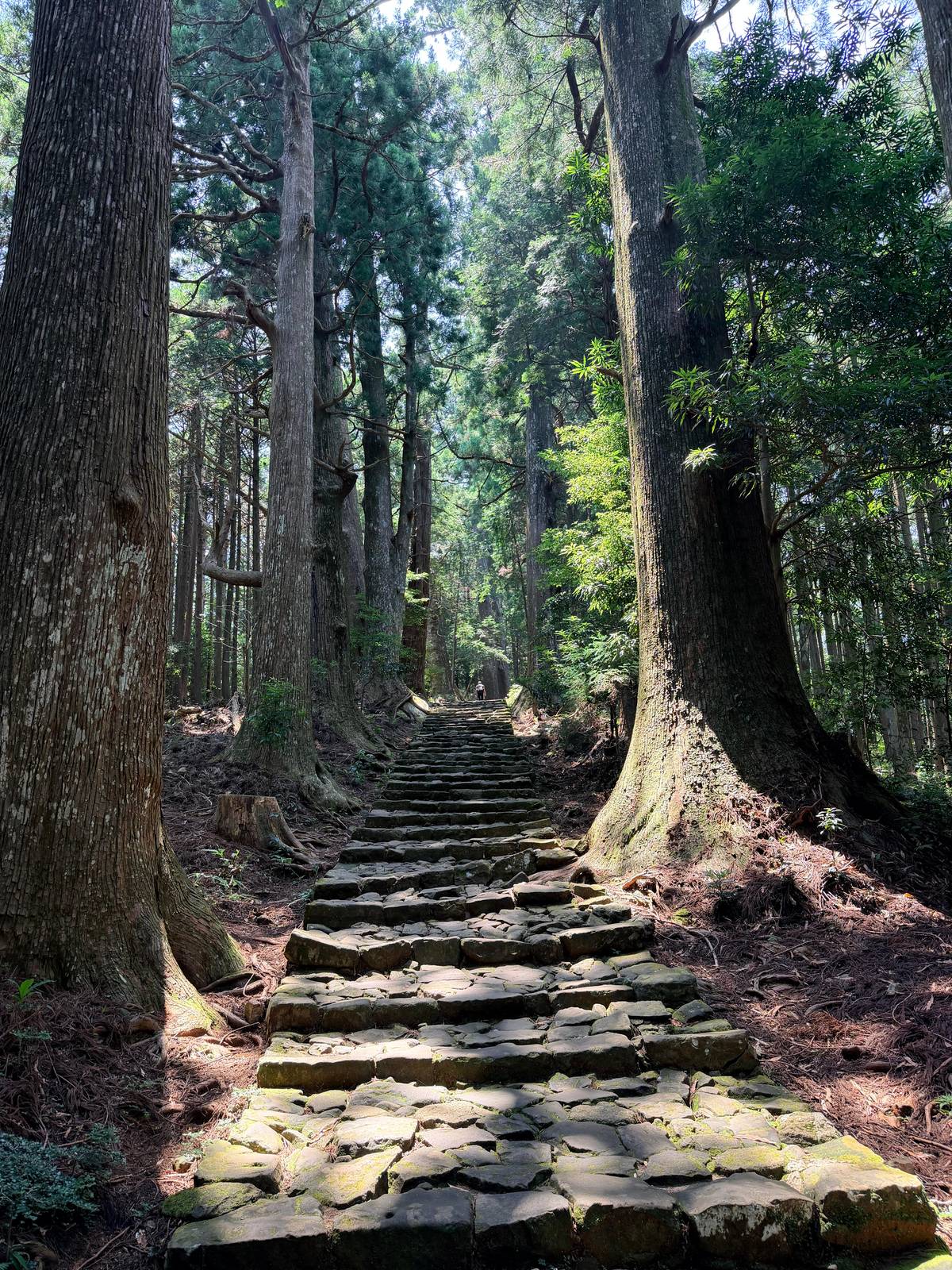
If summer is your only window, walk early, carry water, take short stages and watch the typhoon forecasts. A coach day from Osaka to the Grand Shrines is another option in the heat: the walking part is the short Daimon-zaka climb, listed at 20 to 40 minutes.
Your day in Kumano
Three shrines and the cedar steps in one day.
Pick a date, meet in central Osaka, and cancel free up to 24 hours before.


You ask,we answer.
When is the best time to walk?
Spring and fall. The tourism bureau names them as the popular seasons; the Nakahechi is open year-round.12
Which month has the most rain?
July, about 395 mm. June is close behind with 387.5 mm and the most rainy days, about 15.3
How cold is it in January?
Highs about 10.5 °C. Average lows are -1.2 °C at the Kurisugawa station on the Nakahechi.3
Does it snow on the trail?
Rarely. Snow and frost are possible from late December to late February, mostly on the passes.516
Is the Kohechi open in winter?
No. It is technically closed from mid-December to mid-March for snow on the passes.12
What about typhoons?
Check the forecast daily. Typhoon rain and wind can cause flash floods, landslides and flying debris.9
How long are the days in summer?
About 14.4 hours in June. Daylight at mid-month in June, computed for the latitude of Kumano Hongu Taisha.3
Sources
Sources and evidence
- 1Tanabe City Kumano Tourism BureauKumano Kodo Tips & Safety↩
- 2Tanabe City Kumano Tourism BureauKumano Kodo Tips & Safety↩
- 3Japan Meteorological AgencyClimate normals (heinenchi), Station Kurisugawa (JMA AMeDAS 0971), 1991 to 2020↩
- 4Tanabe City Kumano Tourism BureauKumano Kodo Tips & Safety↩
- 5Tanabe City Kumano Tourism BureauKumano Kodo Tips & Safety↩
- 6Tanabe City Kumano Tourism BureauKumano Hayatama Taisha↩
- 7Tanabe City Kumano Tourism BureauKumano Hongu Taisha↩
- 8Tanabe City Kumano Tourism BureauKumano Kodo Tips & Safety↩
- 9Tanabe City Kumano Tourism BureauKumano Kodo Tips & Safety↩
- 10Tanabe City Kumano Tourism BureauKumano Kodo Tips & Safety↩
- 11Tanabe City Kumano Tourism BureauKumano Kodo Tips & Safety↩
- 12Tanabe City Kumano Tourism BureauKohechi↩
- 13Tanabe City Kumano Tourism BureauKumano Kodo Tips & Safety↩
- 14Tanabe City Kumano Tourism BureauKumano Kodo Tips & Safety↩
- 15Tanabe City Kumano Tourism BureauKumano Kodo Tips & Safety↩
- 16Tanabe City Kumano Tourism BureauFAQs↩
- 17Tanabe City Kumano Tourism BureauKumano Kodo Tips & Safety↩
- 18Tanabe City Kumano Tourism BureauKumano Kodo Tips & Safety↩
- 19Tanabe City Kumano Tourism BureauKawayu Onsen↩
- 20Tanabe City Kumano Tourism BureauKumano Kodo Tips & Safety↩
- 21Tanabe City Kumano Tourism BureauChikatsuyu-oji to Kumano Hongu Taisha↩
- 22Tanabe City Kumano Tourism BureauKumano Kodo Tips & Safety↩