 Travel light
Guides
Language
EnglishCurrency
US dollar · $Your currency applies on GetYourGuide too.
Guide · Packing
Kumano Kodo packing list, item by item
This Kumano Kodo packing list follows the local tourism bureau's advice: what every walker needs in a day pack, what to wear, and what to add for summer heat or winter frost.
Check availabilityfrom $103 · cancellation is free
Editorial team, kumanokodohike.comUpdated October 22, 20266 minutes to read28 sources
Quick answer
- 01Must have
- Rainwear, a first-aid kit, a paper map, a light and water.1
- 02Wear
- Quick-drying layers, no cotton, broken-in shoes.2
- 03Carry
- Enough yen in cash for the countryside.3
- 04Pack light
- Use a luggage shuttle and a well-fitting pack.4
- 05Day trip only
- Comfortable shoes are what the Osaka tour asks for.
Start with rain
Every list for Kumano starts with rain. The tourism bureau calls the Kii Peninsula one of the wettest areas in Japan, and even the drier months on the Nakahechi average several rainy days.56 Its gear list names rainwear first among the clothes, and notes that a folding umbrella is handy.1
In practice that means a waterproof jacket that breathes, a cover for your day pack and a dry bag inside it for your phone, papers and spare layer. The bureau lists a day pack with a rain cover as the first item of essential gear.1 An umbrella helps on village roads and short climbs, but on narrow, steep forest steps your hands are better kept free.
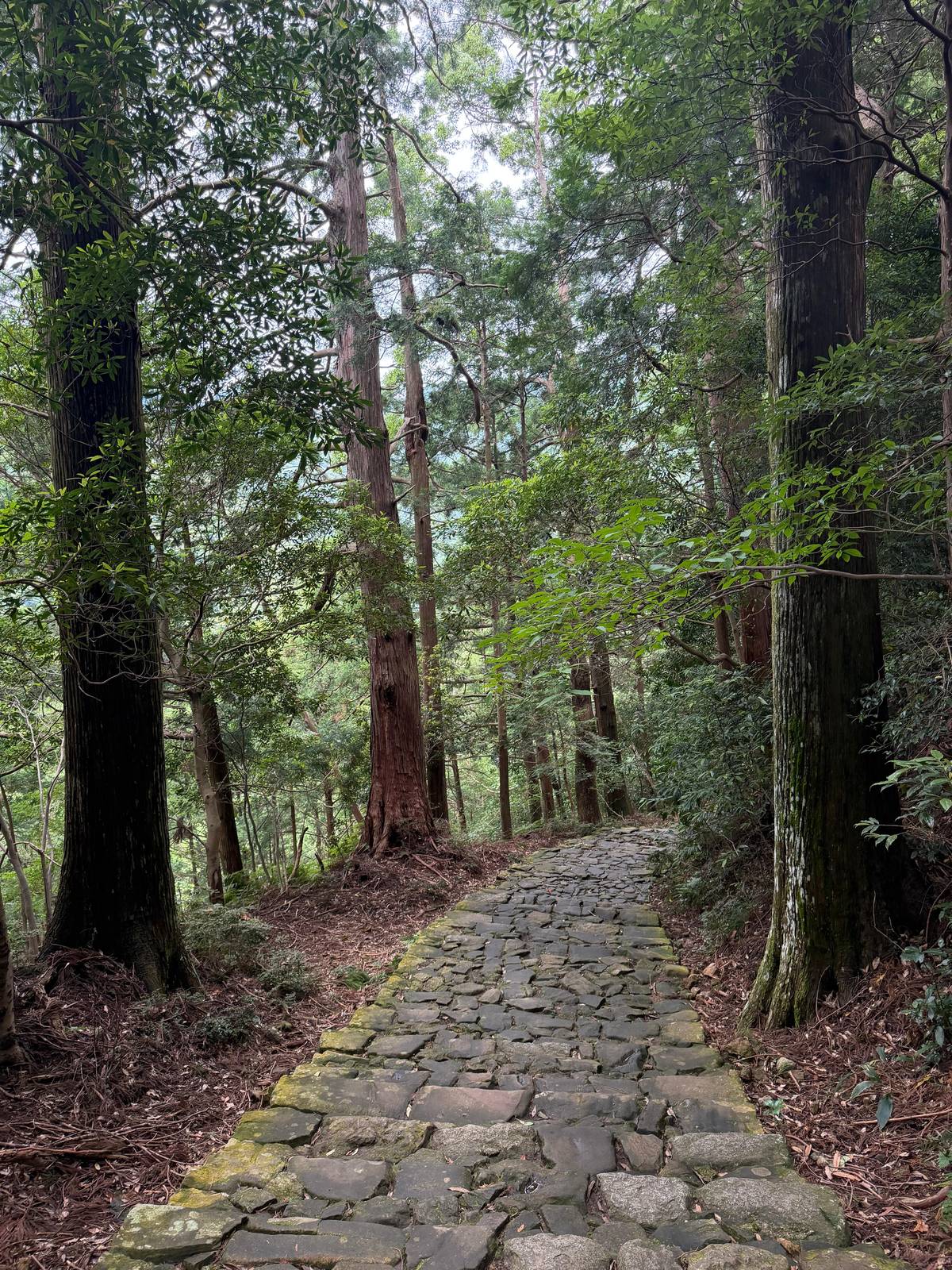
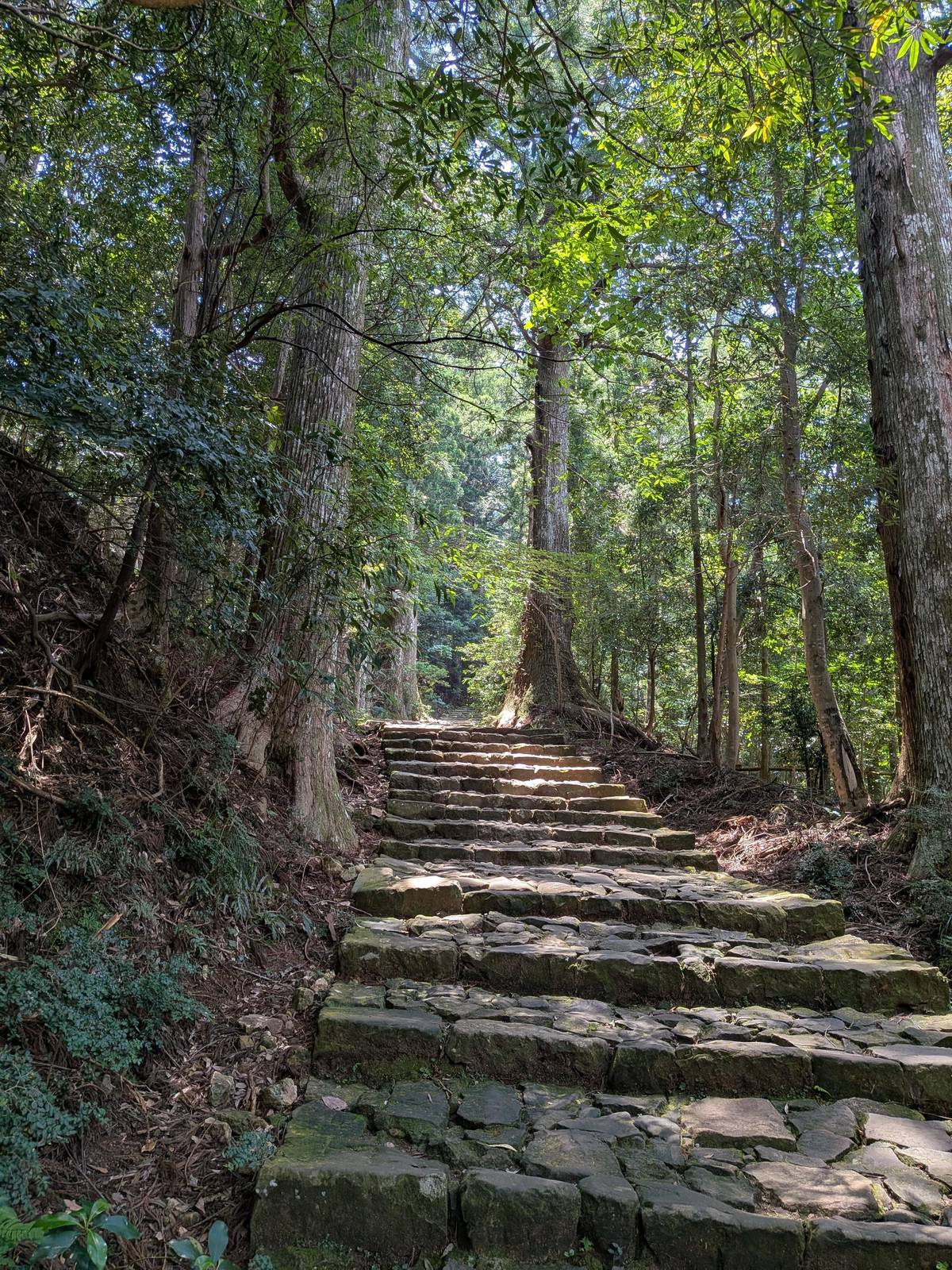
Dry feet matter as much as a dry back. Wet stone is the main hazard on the trail: the bureau notes that most injuries are slips and falls on stone and roots, and that the old cobbled steps are especially slippery in rain.7 Shoes with a grippy sole are therefore part of your rain kit, not just your walking kit. Test the soles on a wet pavement before you leave home; if they slip there, they will slip on moss-covered stone.
Getting ready
From your door to the trailhead
-
Weeks before
Break in your shoes
Long walks in the boots you will wear.2
-
20 days ahead
Book the luggage shuttle
If you want to walk with a day pack.8
-
Before you fly
Get yen in cash
Cards are often not accepted in the countryside.3
-
In Tanabe
Pick up a paper map
At the information center next to the station.9
-
Each morning
Water, bento, forecast
What to wear on the trail
The bureau's clothing advice is short: dress in layers of clothes that dry easily, avoid cotton, and wear sturdy, broken-in footwear.2 A synthetic or wool base layer, a light fleece and the rain shell cover most of the year, with the fleece left in the pack on warm days. Choose colours that do not show mud, because the trail is often wet and you will wear the same layers for several days.
Shoes deserve the most thought. Walking boots or trail shoes you have already worn on long walks are far better than new ones. The bureau's blister advice includes two layers of socks, a thin one under a thicker one, to cut friction.12 Pack spare socks so you can change into a dry pair at lunch.
In summer, resist shorts and sandals. The bureau recommends light long trousers, a long-sleeved shirt and sturdy shoes, as the heat brings out biting insects.13 In winter it suggests a warm hat, gloves, a fleece and an outer shell, because frost and snow are possible from the end of December to the end of February.1415
Why the rain gear matters
Rainy days per month on the Nakahechi
days
The list
What to pack and why
| Item | Why | When |
|---|---|---|
| Rain jacket and pack cover | One of Japan's wettest areas | Always |
| Broken-in shoes with grip | Slippery stone and roots | Always |
| Headlamp | Dark falls early in the valleys | Always |
| Cash in yen | Cards often not accepted | Always |
| Insect repellent | Biting insects in the heat | Summer |
| Warm hat and gloves | Frost and snow possible | Winter |
| Walking poles | Balance on long descents | Multi-day walks |
From the essential gear and safety advice of the Tanabe City Kumano Tourism Bureau.57163171418
Decision helper
What should go in your bag?
Find your trip in the left column
Comfortable shoes and cash
The listing asks for comfortable shoes; lunch is not included.
Walking poles
They help on the long stone descents; some are sold at Takijiri.18
Dressing in layers in clothes that dry easily is recommended. Avoid cotton. Sturdy, worn-in footwear is essential.
The essential gear in your day pack
The bureau's own list of essential gear is a good checklist. It includes a day pack with a rain cover, a first-aid kit with blister care, a paper map, rainwear, a headlamp or flashlight, sun protection and enough water, especially in hot weather.1
It continues with a phone and charger, insect repellent for the hot months, collapsible walking poles and a camera.17 A pocket wifi router can be rented at the international airports if you want a steady connection.17 Poles help on the long stone descents into Hongu and Nachi; the Kumano Kodo Kan at Takijiri-oji sells some, open 8:30 to 17:15 every day.18
Add a small bag for rubbish. There are almost no public bins along the trail and walkers are asked to carry out all garbage; a plastic bag for your finished bento box solves it.21 Keep the emergency number 119 in your phone for fire or medical emergencies.22
Checklist
The day pack, ticked off
01
Wear
- Broken-in shoes with grip
- Quick-drying layers, no cotton
- Rain jacket and pack cover
02
Carry
- Water filled at the inn
- Headlamp
- First-aid kit with blister care
- Yen in cash
- Paper map and rubbish bag
Video
A KUMANO KODO PACKING LIST
The video loads only when you tap play.
Water, food and money
Carry water from the start of each day. Natural water sources along the trail have not been tested, so fill up at your inn.10 Small shops and vending machines exist in the villages, but some stages have none: there are no restaurants between Tsugizakura-oji and Kumano Hongu Taisha.23
For lunch, many inns prepare a bento box for the next day.24 If you like coffee in the morning, bring instant coffee: not every inn serves it, but all can give you hot water.25 A few snacks for the steep sections make the long days easier. Rice balls, dried fruit and nuts travel well and survive a damp day in the pack.
Money is part of the packing list. The bureau advises carrying enough yen in cash, because many facilities in the countryside do not take credit cards and exchange is very limited.3 Keep coins for buses, offerings at the shrines and small entry fees here and there.
Electronics, light and small things
Japan runs on 100 volts with Type A plugs, two flat parallel pins; bring an adapter if your devices need one.26 A small power bank keeps your phone alive for maps and photos on a long stage.
Pack a headlamp even in summer. Daylight is short in winter and it gets dark earlier in the valleys where the villages lie, so a late finish can catch you on the trail.16 The bureau lists a light source among the essentials for exactly this reason.1
Some small items save trouble: blister plasters and tape for hot spots, sun cream and a hat, and a stamp book for the shrine stamps along the way. In the warm, humid months giant centipedes like to hide in hiking shoes, so check your boots in the morning before putting them on.27
Pack light and let the bags travel
The bureau's advice is to pack light, use a daily luggage shuttle to lighten your load and carry a well-fitting pack that spreads the weight.4 With a shuttle you walk with a day pack and your main bag meets you at the next inn.
Shuttles must be booked at least 20 days ahead, and online booking only works when your inns are booked through KUMANO TRAVEL.820 If you start from Tanabe, anything you do not need on the trail can be stored at the Tanabe Tourist Information Center beside Kii-Tanabe station.28
Even with a shuttle, carry the essentials yourself: rain gear, a warm layer, water, lunch, first aid, a light, cash and your phone. A compact day pack holds all of it with room for a fleece. Label the shuttle bag clearly, put everything inside it rather than tied to the outside, and pack your bag for the next morning before you go to dinner.
If you are only coming for the day
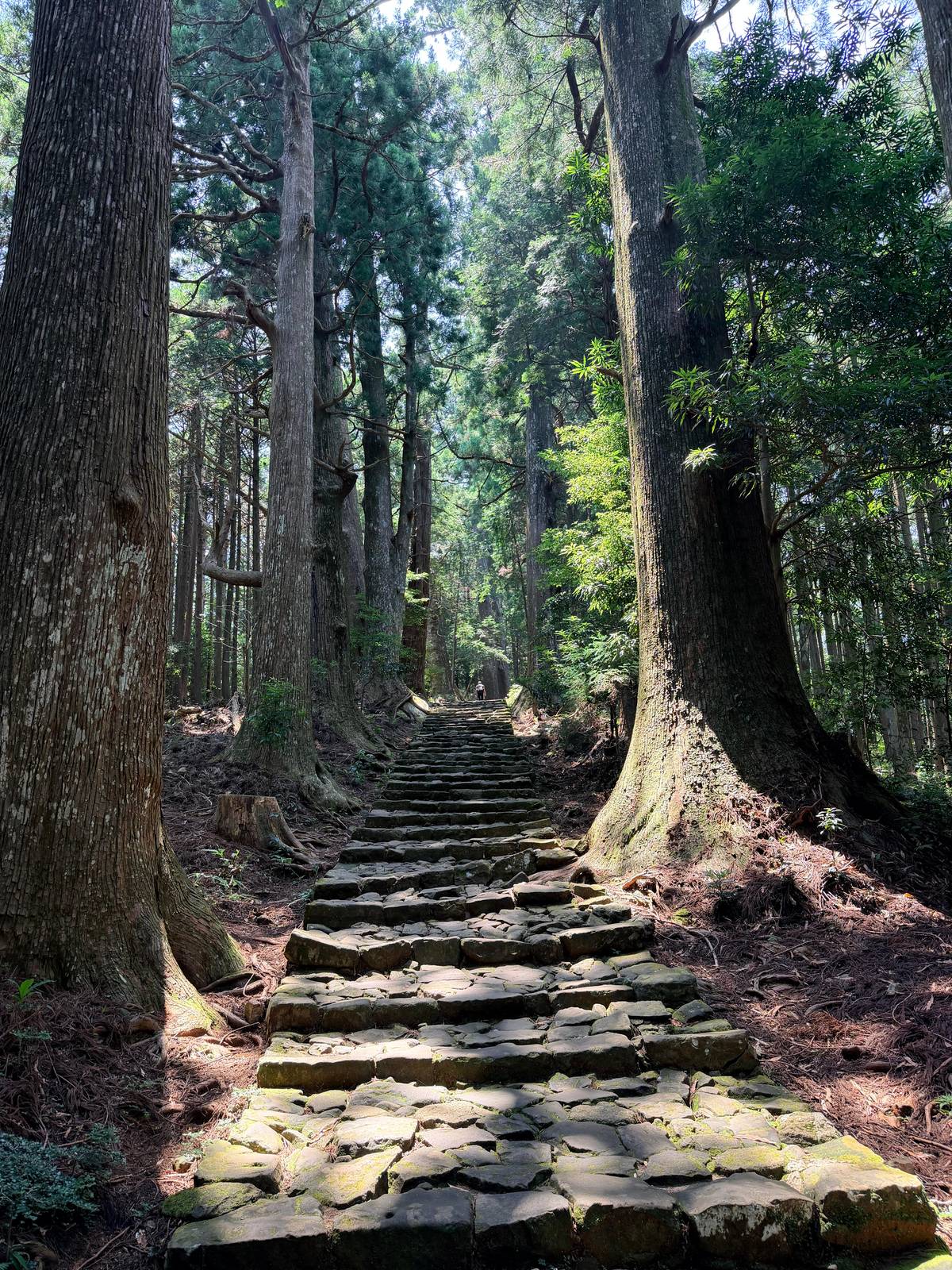
The coach day trip from Osaka needs far less. Its listing asks you to bring comfortable shoes, and the walking is a short climb on the Daimon-zaka steps, listed at 20 to 40 minutes. Lunch is not included, so carry cash for a meal on the way.
A rain jacket or umbrella still makes sense, since the Kii Peninsula is one of the wettest areas in Japan.5 A small towel is handy for the optional foot bath at Totsukawa Onsen at the end of the day. Food is not allowed in the vehicle and there is no smoking.
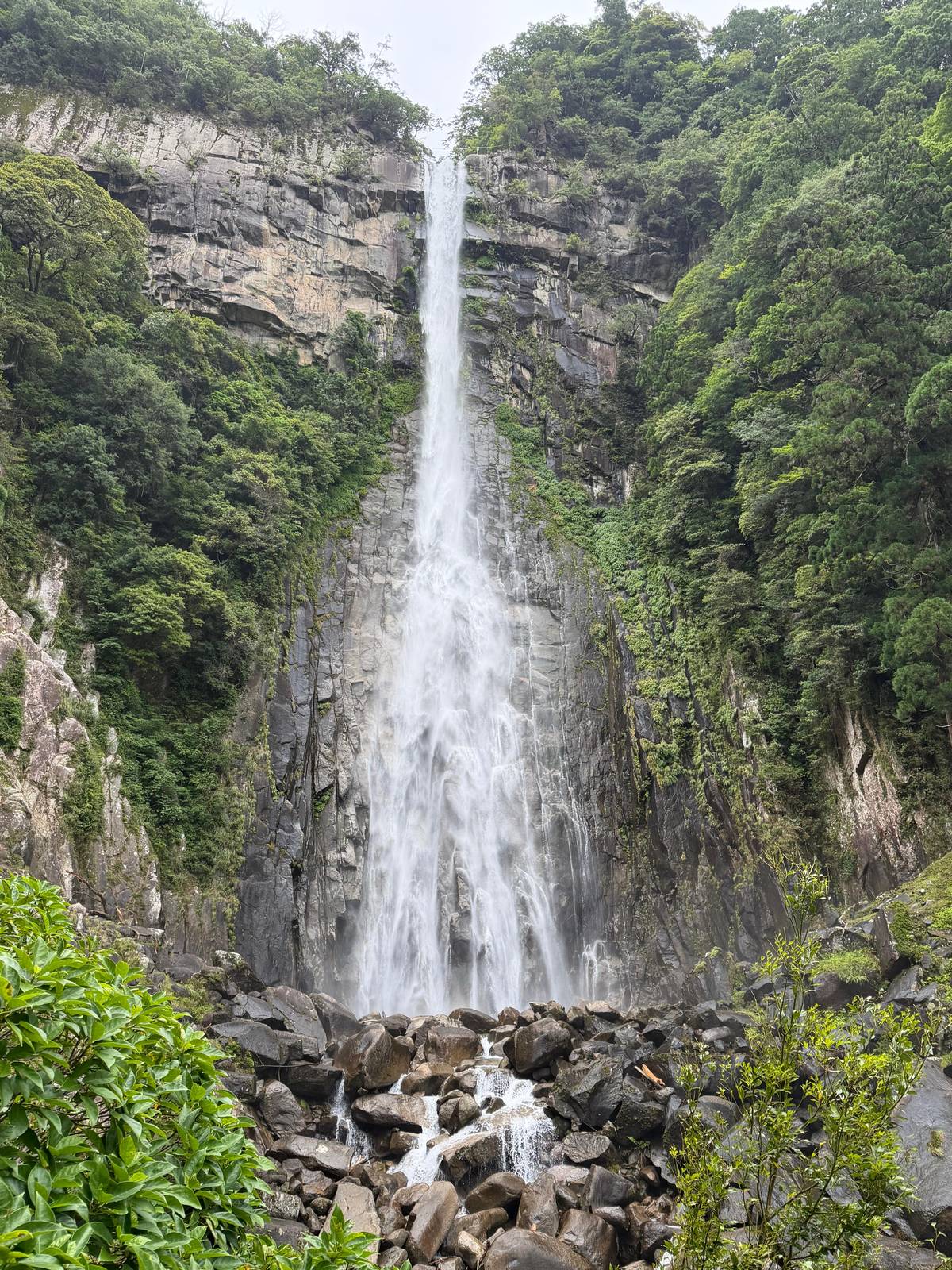
Bring your phone charged for photos at Nachi Falls and the shrines. Everything else, from entrance fees to the audio guide and the stamp booklet, is included in the ticket.
Your day in Kumano
Three shrines and the cedar steps in one day.
Pick a date, meet in central Osaka, and cancel free up to 24 hours before.


You ask,we answer.
What is the most important item to pack?
Rain gear. The bureau calls the Kii Peninsula one of the wettest areas in Japan and lists rainwear among the essentials.51
What shoes should I wear?
Sturdy, broken-in footwear. Wear grippy soles; most injuries are slips on wet stone and roots.27
Should I wear shorts in summer?
Better not. Light long trousers and long sleeves keep off biting insects, the bureau advises.13
Do I need cash?
Yes, in yen. Many places in the countryside do not take credit cards, and exchange is very limited.3
Can I drink from streams?
No. Natural water sources along the trail have not been tested; fill up at your inn.10
Where can I buy walking poles?
At the Kumano Kodo Kan. It sells some sticks and poles at Takijiri-oji, open 8:30 to 17:15 daily.18
What plugs does Japan use?
Type A, 100 volts. Two flat parallel pins; bring an adapter if your chargers use another plug.26
Sources
Sources and evidence
- 1Tanabe City Kumano Tourism BureauKumano Kodo Tips & Safety↩
- 2Tanabe City Kumano Tourism BureauKumano Kodo Tips & Safety↩
- 3Tanabe City Kumano Tourism BureauKumano Kodo Tips & Safety↩
- 4Tanabe City Kumano Tourism BureauKumano Kodo Tips & Safety↩
- 5Tanabe City Kumano Tourism BureauKumano Kodo Tips & Safety↩
- 6Japan Meteorological AgencyClimate normals (heinenchi), Station Kurisugawa (JMA AMeDAS 0971), 1991 to 2020↩
- 7Tanabe City Kumano Tourism BureauKumano Kodo Tips & Safety↩
- 8Tanabe City Kumano Tourism BureauLuggage Shuttle & Storage↩
- 9Tanabe City Kumano Tourism BureauKumano Kodo Maps↩
- 10Tanabe City Kumano Tourism BureauKumano Kodo Tips & Safety↩
- 11Tanabe City Kumano Tourism BureauKumano Kodo Tips & Safety↩
- 12Tanabe City Kumano Tourism BureauKumano Kodo Tips & Safety↩
- 13Tanabe City Kumano Tourism BureauKumano Kodo Tips & Safety↩
- 14Tanabe City Kumano Tourism BureauKumano Kodo Tips & Safety↩
- 15Tanabe City Kumano Tourism BureauKumano Kodo Tips & Safety↩
- 16Tanabe City Kumano Tourism BureauKumano Kodo Tips & Safety↩
- 17Tanabe City Kumano Tourism BureauKumano Kodo Tips & Safety↩
- 18Tanabe City Kumano Tourism BureauFAQs↩
- 19Tanabe City Kumano Tourism BureauKumano Kodo Tips & Safety↩
- 20Tanabe City Kumano Tourism BureauLuggage Shuttle & Storage↩
- 21Tanabe City Kumano Tourism BureauKumano Kodo Tips & Safety↩
- 22Tanabe City Kumano Tourism BureauKumano Kodo Tips & Safety↩
- 23Tanabe City Kumano Tourism BureauTsugizakura-oji to Kumano Hongu Taisha↩
- 24Tanabe City Kumano Tourism BureauKumano Kodo Tips & Safety↩
- 25Tanabe City Kumano Tourism BureauKumano Kodo Tips & Safety↩
- 26Tanabe City Kumano Tourism BureauKumano Kodo Tips & Safety↩
- 27Tanabe City Kumano Tourism BureauKumano Kodo Tips & Safety↩
- 28Tanabe City Kumano Tourism BureauFAQs↩