 The oldest
Yunomine Onsen
Next to the Dainichi-goe
- Age
- About 1,800 years
- Famous for
- Tsuboyu bath
- Tsuboyu
- 800 yen
Guides
Language
EnglishCurrency
US dollar · $Your currency applies on GetYourGuide too.
Guide · Where to stay
Most Kumano Kodo hotels are not hotels at all but small inns in mountain villages, many with a hot spring. Here is how the types differ, where to sleep each night and why you must book ahead.
Editorial team, kumanokodohike.comUpdated October 22, 20266 minutes to read83 sources
Quick answer
On a multi-day walk your bed decides the shape of each day. The trail runs through isolated, mountainous country with few places to stay, and some settlements have only a handful of rooms. The tourism bureau lists the options in the Tanabe and Kumano region as hotels, ryokan inns and minshuku guesthouses.1
Booking ahead is not a formality. The bureau points out that walking up to an inn without a reservation is not usual in Japan, that inns may be full, closed or without food prepared on a night nobody booked, and that evening buses are few.689 A missing bed in a mountain village is a real problem, not an inconvenience.
If you take the coach day trip from Osaka sold on this site, none of this applies: you sleep in your Osaka hotel and return there the same evening. This page is for those staying in Kumano, whether for one night near the shrines or for a week on the Nakahechi.
An evening at an inn
A Kumano Kodo ryokan is a Japanese inn. Most have Japanese-style rooms with tatami mats, shoji sliding doors and futons, and a traditional kaiseki set meal is often included.1512 Baths may be private or shared, and in onsen villages the bath is often the pride of the house.16
Minshuku are family-run guesthouses, often in rural areas, usually small with only a few Japanese-style rooms.1718 Baths and toilets are often shared, and the meals are traditional dishes of local produce in a homely atmosphere.1920 On the Nakahechi they are the backbone of the trail: many villages have nothing else.
There are other types too. Pensions are like minshuku with western beds and often western meals.21 Guesthouses and B&Bs are mostly lower-budget and often do not include meals.22 In Koyasan, at the start of the Kohechi, shukubo temple lodgings serve Buddhist vegetarian food and may let you join morning services.2324
Types of stay
| Type | Rooms | Meals | Baths |
|---|---|---|---|
| Ryokan | Tatami, futons | Kaiseki often included | Private or shared |
| Minshuku | A few Japanese rooms | Home cooking | Often shared |
| Pension | Western beds | Often western meals | Varies |
| Guesthouse | Japanese or western | Often no meals | Varies |
| Shukubo | Temple rooms | Buddhist vegetarian | Varies |
From the Tanabe City Kumano Tourism Bureau's lodging guide.15121819212224
Hot-spring villages
Please be aware that just walking up to accommodations is not common in Japan.
Several onsen villages sit within reach of Kumano Hongu Taisha, and they are the reason the bureau suggests a rest day here when you continue to Nachi.28 Yunomine Onsen was discovered about 1,800 years ago and is thought to be one of the oldest hot springs in Japan.3 Its tiny Tsuboyu bath, used privately for up to 30 minutes, is one of the only hot springs you can bathe in that is part of a World Heritage property.2930
At Kawayu Onsen hot water bubbles up through the bed of a clear river, and from December to February a giant river bath called Sennin-buro is made, about 40 m by 15 m and 60 cm deep.43132 Wataze Onsen has the largest open-air hot spring bath in western Japan.5
Hongu itself is a small town of about 500 people with its own public hot spring, Sosei-no-yu, 210 yen for adults and open from 15:00 to 20:00, closed on Wednesdays.3325 Staying in a Kumano Kodo onsen village means a soak after the walk and a short bus ride to the shrine the next morning.
Map
The trail from Takijiri-oji to the three Grand Shrines, the Hongu area with its hot springs, the Nachi sanctuary up close, then the whole peninsula with the stations you arrive at.
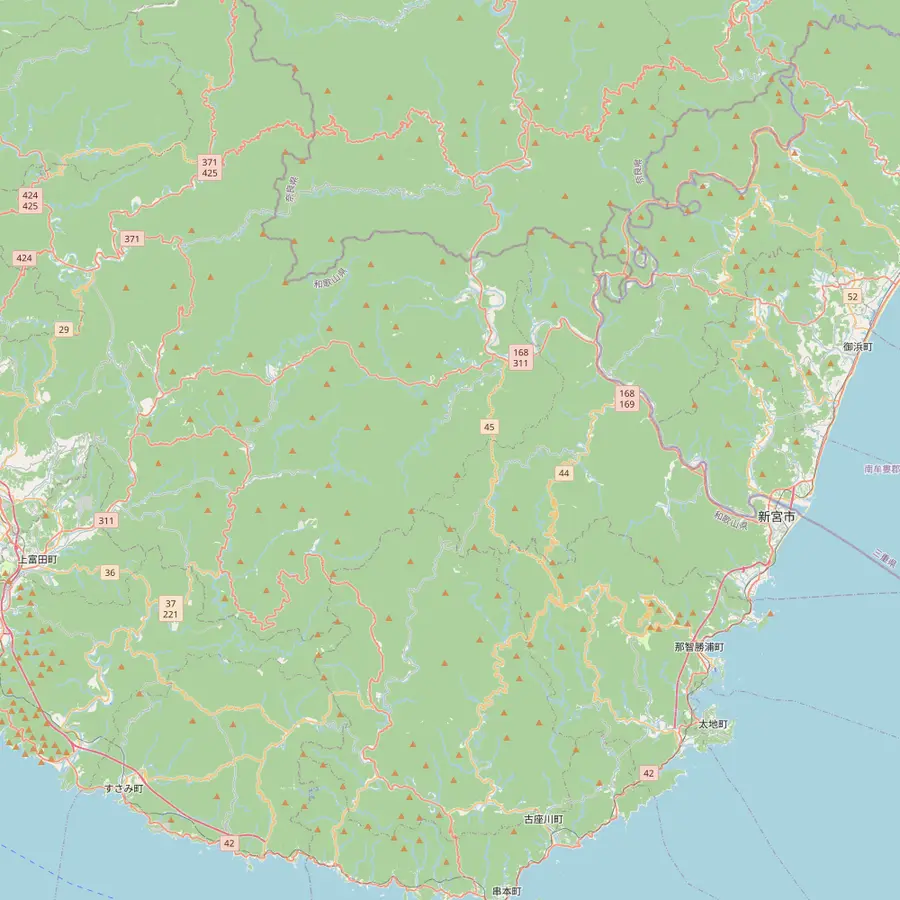 1Takijiri-oji2Takahara3Chikatsuyu-oji4Tsugizakura-oji5Hosshinmon-oji6Kumano Hongu Taisha7Koguchi8Kumano Nachi Taisha9Hayatama Taisha
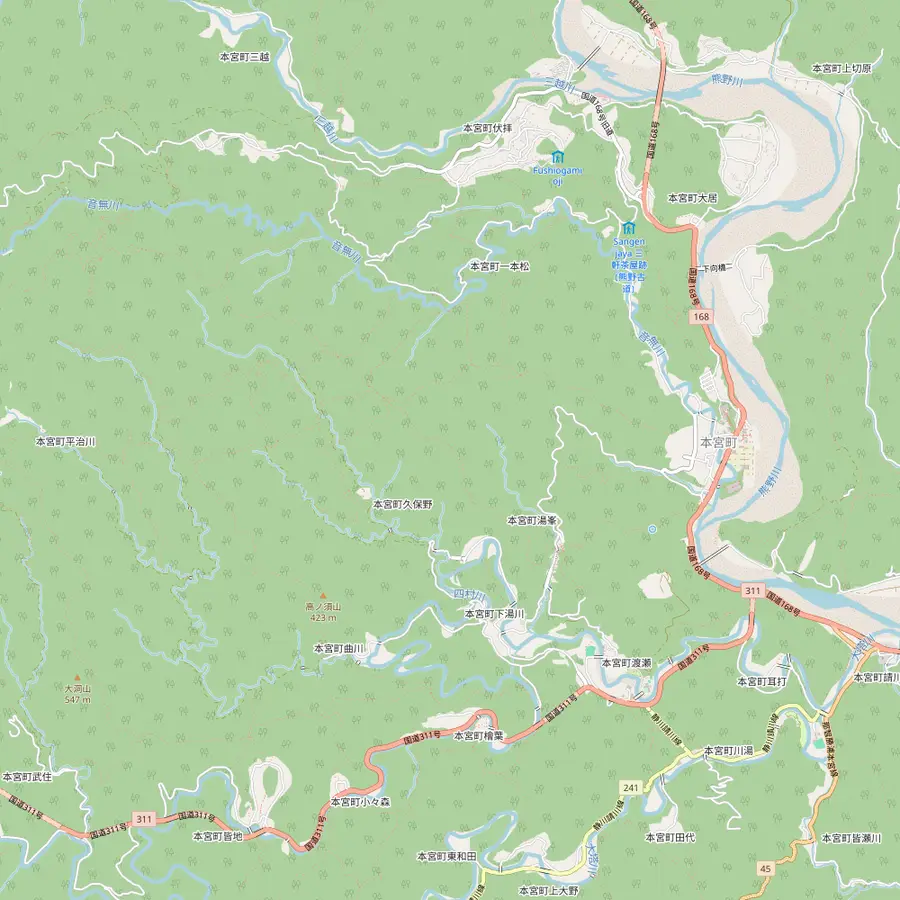 10Fushiogami-oji11Oyunohara12Yunomine Onsen13Wataze Onsen14Kawayu Onsen
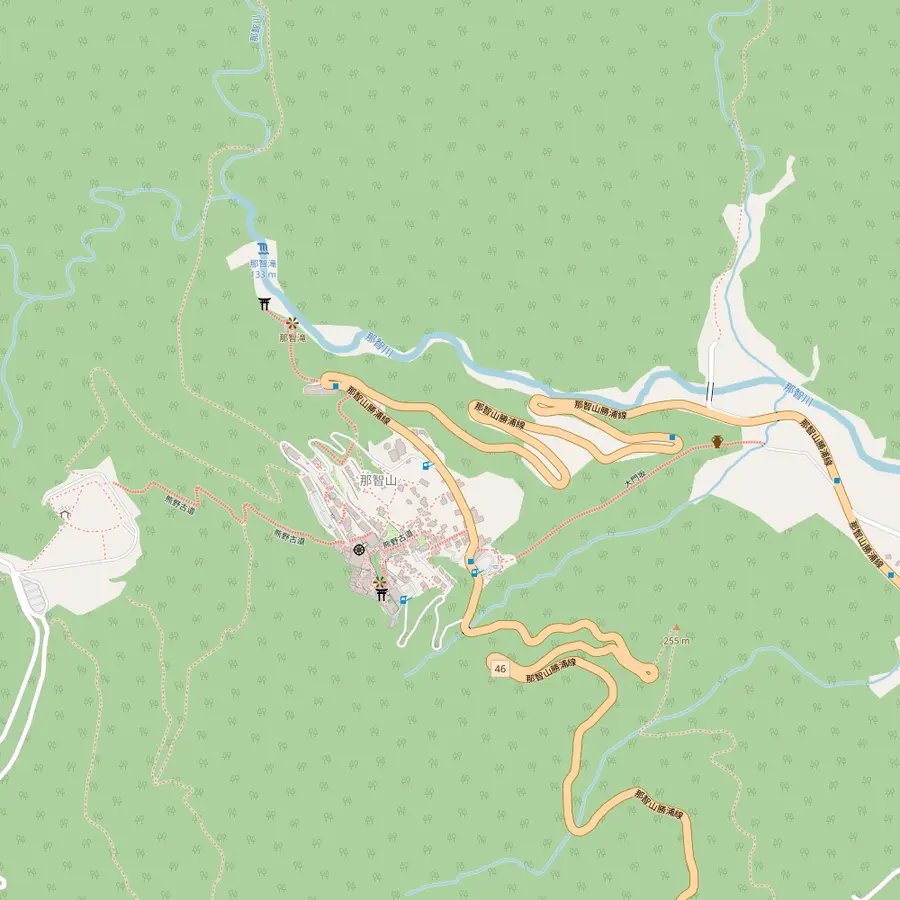 15Daimon-zaka16Seiganto-ji17Nachi Falls (Hiro-jinja)
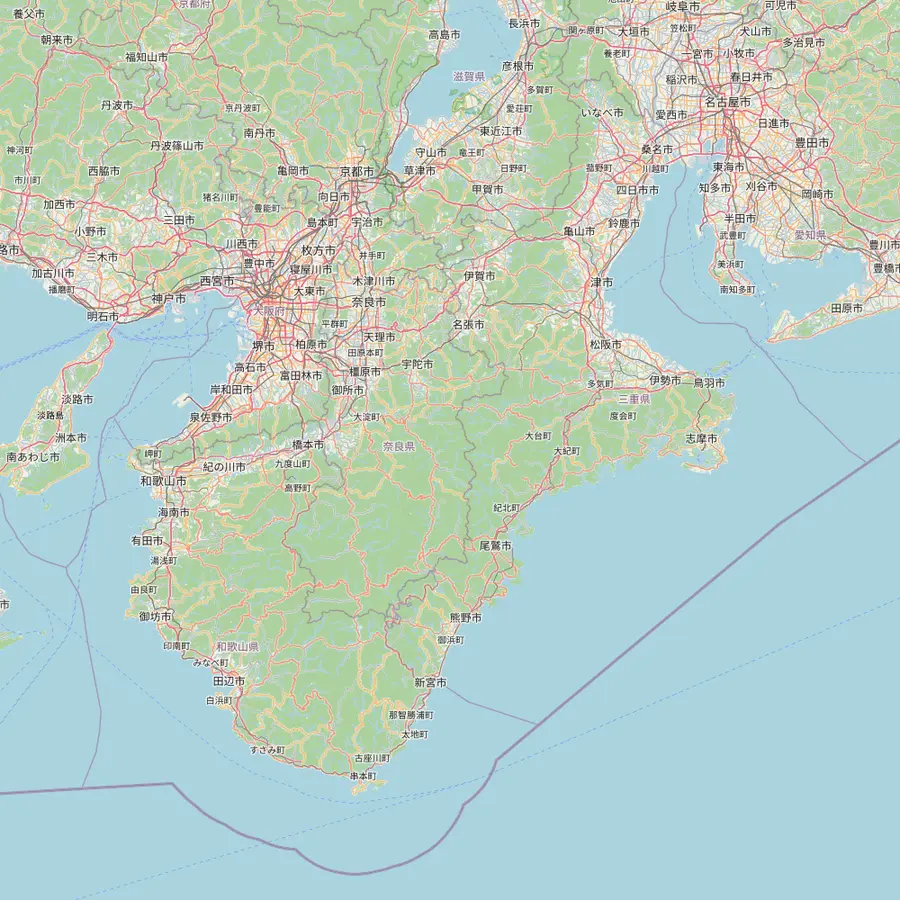 18Osaka (Shinsaibashi)19Kyoto20Koyasan21Kii-Tanabe22Shingu23Kii-Katsuura24Ise
The usual first day of a Nakahechi walk starts here, beside the Kumano Kodo Kan pilgrimage center.3435
In Google Maps ↗A steep climb of about 4 km from Takijiri-oji, through native and planted forest.3637
In Google Maps ↗An old oji in a basin at about 300 m, at the end of the classic first day; the village has about 450 people.382
In Google Maps ↗Named for a grafted cherry; some of its cedars are 8 m round and thought to be up to 800 years old.39
In Google Maps ↗Start of the popular 7 km half-day walk to Kumano Hongu Taisha; there is nowhere to stay here.4041
In Google Maps ↗Head shrine of over 3,000 Kumano shrines across Japan; the grounds are free.4243
In Google Maps ↗Overnight stop between the Kogumotori-goe and the Ogumotori-goe on the way to Nachi.4445
In Google Maps ↗Halfway up Nachi Mountain at about 350 m, about 10 km inland from Katsuura.4647
In Google Maps ↗At the mouth of the Kumano-gawa, where the river meets the Pacific.48
In Google Maps ↗Where pilgrims fell to their knees at their first sight of the grand shrine.49
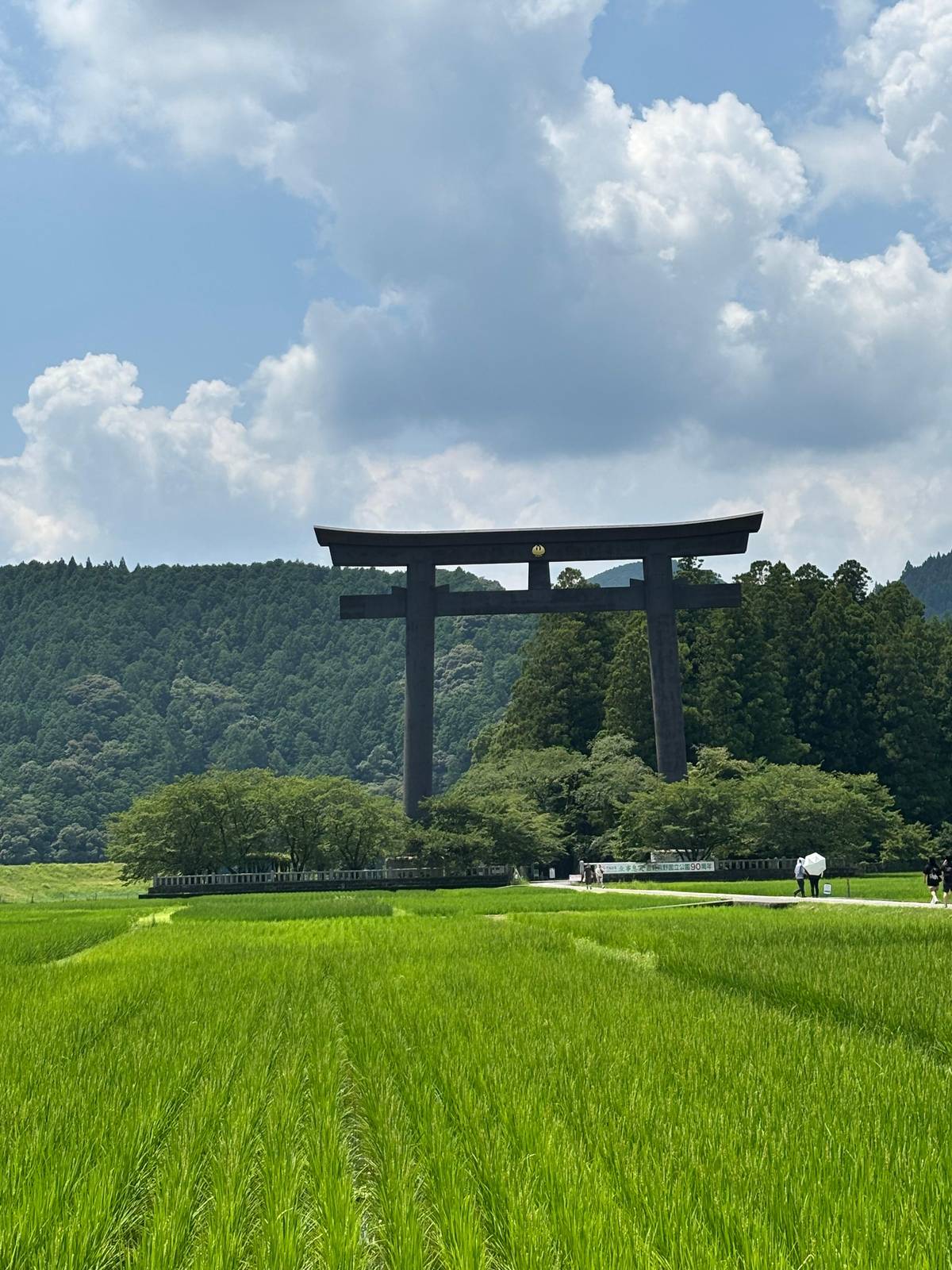
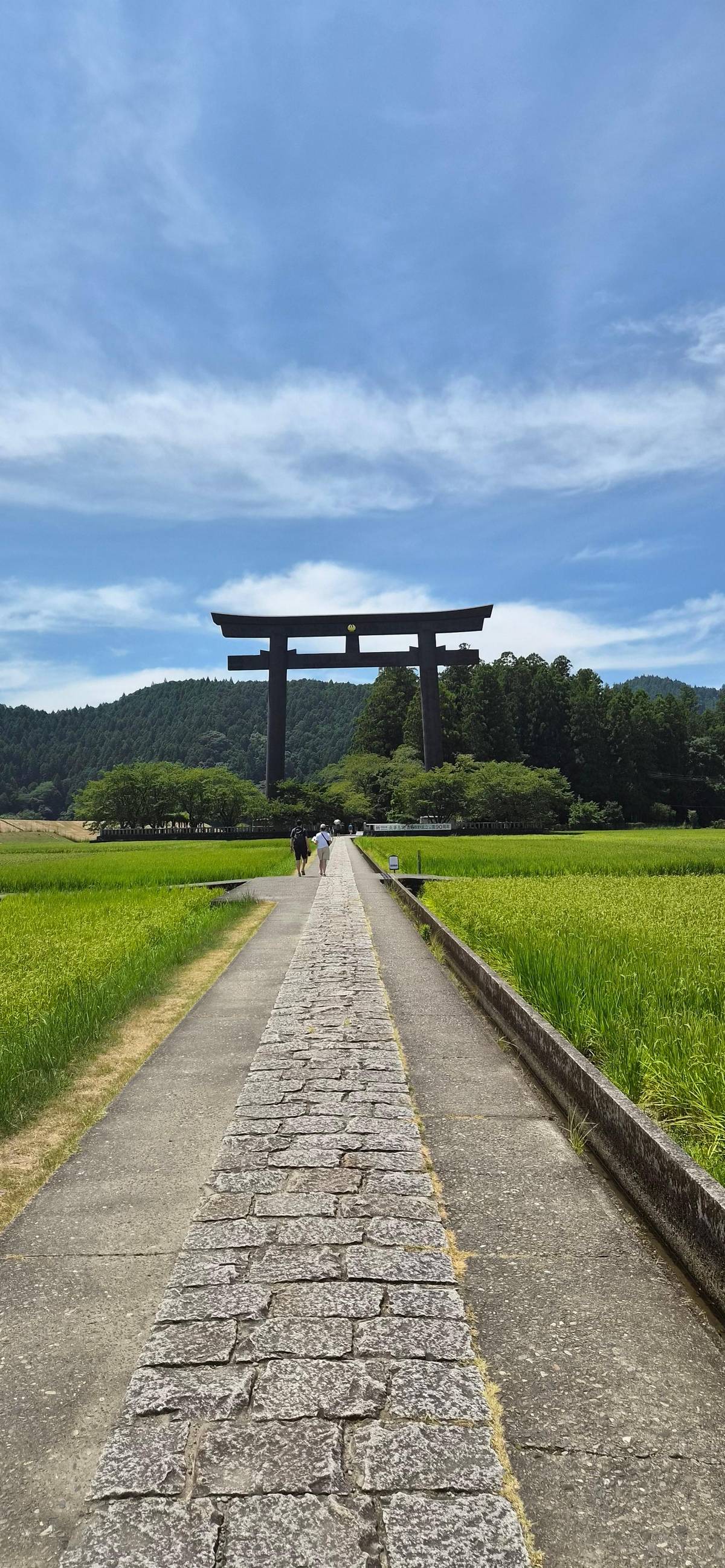
In Google Maps ↗The original shrine site on a sandbank, marked by a steel torii 33.9 m tall.5051
In Google Maps ↗A hot spring found about 1,800 years ago, with the Tsuboyu bath.330
In Google Maps ↗The largest open-air hot spring bath in western Japan.5
In Google Maps ↗Hot water rises through the river bed; in winter a huge river bath is dug.431
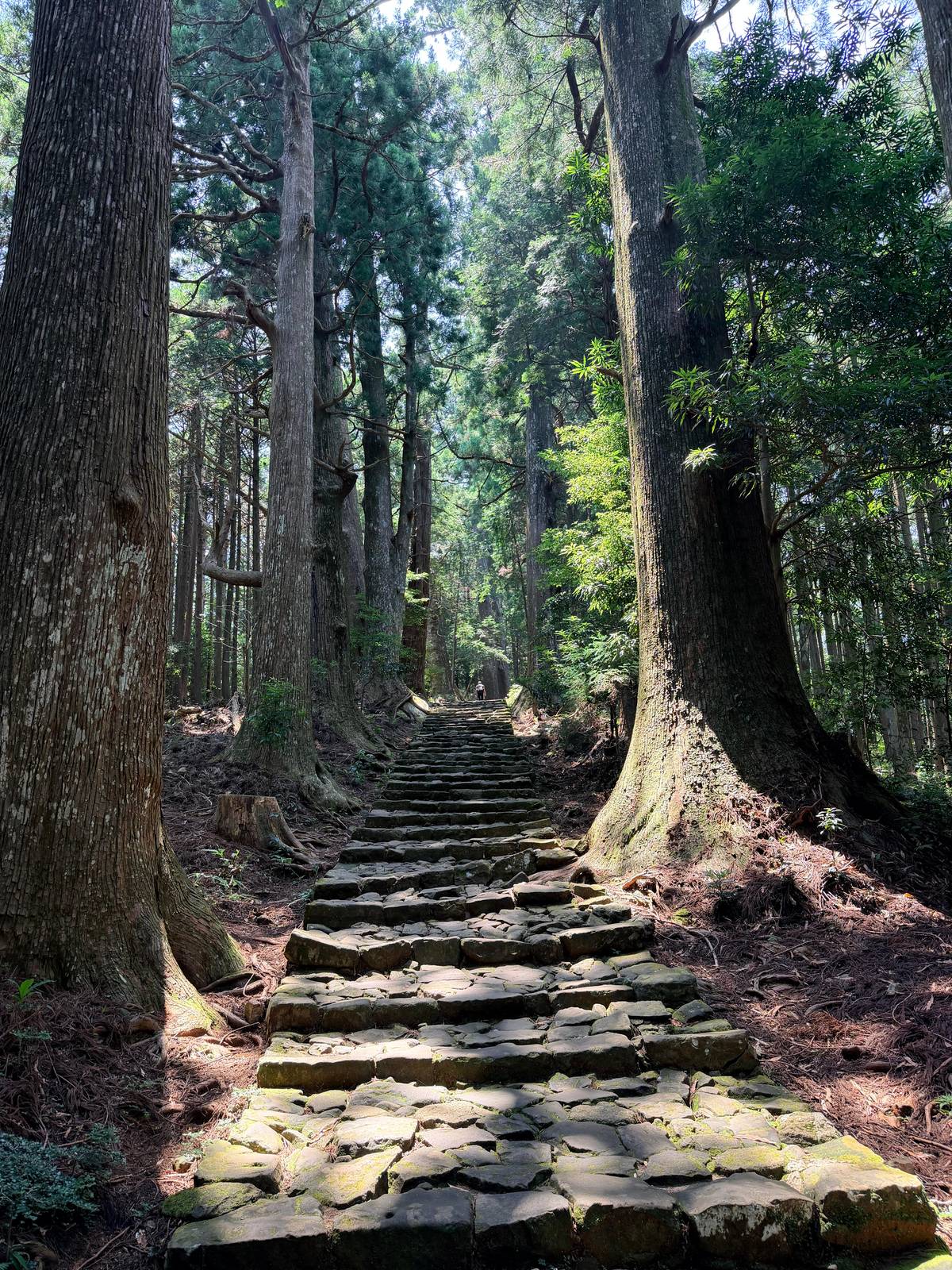
In Google Maps ↗About 600 m of stone stairs, 267 steps, under old cedars.5253
In Google Maps ↗A Tendai temple and the first stop of the Saigoku pilgrimage to 33 Kannon.54
In Google Maps ↗133 m high, worshipped directly with no shrine hall.5556
In Google Maps ↗The day tour leaves from Q Plaza Shinsaibashi or the National Bunraku Theatre.
In Google Maps ↗The Kuroshio reaches Kii-Tanabe from Kyoto in 2 hrs 35 min.57
In Google Maps ↗Start of the Kohechi; reached from Namba on Nankai trains and a cable car.5859
In Google Maps ↗Gateway to the Nakahechi; trail buses leave from stop No. 2.6061
In Google Maps ↗Home of Hayatama Taisha and a bus hub towards Hongu.4862
In Google Maps ↗Buses climb to Nachisan in about 30 minutes.63
In Google Maps ↗Start of the Iseji, about 170 km along the east coast.64
In Google Maps ↗Checklist
Video
The video loads only when you tap play.
Walkers starting from the cities usually sleep in Tanabe the night before, or end the first day in Takahara, because the full first stage cannot be done on the day you arrive.6566 Tanabe is the largest town in the south of the Kii Peninsula, with around 65,000 people.67
Chikatsuyu is the classic first overnight, a quiet village of about 450 people about 50 minutes by bus from Kii-Tanabe station.268 Note that there is no accommodation at Hosshinmon-oji, so plan the bus from there if you stop walking at that point.41
On the way to Nachi, Koguchi is the overnight between the two mountain days.4445 On the Kohechi, book Miura-guchi before anything else: it has only two places to stay and they fill early.69 Campers have official campsites at Chikatsuyu, Kawayu Onsen, Wataze Onsen and Koguchi.70
Inn evenings follow a rhythm. The bureau suggests arriving around 17:00 so there is time to bathe and change into a yukata before dinner, which is usually served around 18:00.117 Aim to finish walking between 15:00 and 17:00 and you will fit in easily.10
Many inns along the trail make a bento lunch box for the next day, which matters on stages with no restaurants.13 Order it when you check in. Fill your water bottles at the inn as well, since natural water along the trail has not been tested.71
Bring cash. Many places in the countryside do not take credit cards, and money exchange is very limited.72 Plan your yen before you leave the city, and keep some spare for the bus fares between trailheads.
Dinner and breakfast are usually part of the stay, and they are Japanese-style, built around local produce, with rice at most meals.7320 If you are used to coffee in the morning, bring instant coffee; not every inn serves it, but all can give you hot water.74 Lunch on the trail is the bento you ordered the night before, or food from a village shop.
Special diets need planning. The bureau notes that vegetarianism is not common in Japan and that small inns often find varied requests hard to meet.75 The local reservation system lets you state dietary needs with your booking, and that is the moment to do it, not on arrival.76 Katsuo dashi, a fish broth, seasons many dishes and is very hard to remove from traditional cooking.77
If you can accept traces of dashi, far more inns can take your booking. With a severe allergy, the bureau suggests booking without meals and buying or preparing food that you know is safe.78 Either way, write your needs clearly when you reserve: a family guesthouse in a mountain village cannot shop for a new menu at short notice.
The Nakahechi has daily luggage shuttle services between inns, which let you walk with a day pack.79 They come with firm conditions: they must be booked at least 20 days in advance, and online booking only works when the inns themselves were booked through the local KUMANO TRAVEL system.1480
That is one reason many walkers book everything in one place. Booking through KUMANO TRAVEL also registers your trek with the local authorities.81 If you start from Tanabe, luggage you do not need on the trail can wait at the Tanabe Tourist Information Center next to Kii-Tanabe station.82
Pack as if the shuttle might not reach you on time anyway: keep rain gear, a warm layer, your phone charger and any medicine in your day pack. The bureau's own advice is to pack light and carry a well-fitting pack.83
Your day in Kumano
Pick a date, meet in central Osaka, and cancel free up to 24 hours before.
Hotels, ryokan and minshuku. Plus pensions, guesthouses and, in Koyasan, temple lodgings.1212223
Yes, every night. Walking up without a reservation is not usual in Japan, and beds are limited.6
Usually around 18:00. Arriving around 17:00 leaves time for a bath and a yukata first.711
No. There is no accommodation there; plan the bus onward to Hongu or the onsen villages.41
Yunomine Onsen. It was discovered about 1,800 years ago and is thought to be among Japan's oldest.3
800 yen for adults. 400 yen under 12, open 6:00 to 21:00, as read in October 2026.26
Only at official sites. There are campsites at Chikatsuyu, Kawayu Onsen, Wataze Onsen and Koguchi.70
Sources