 Booklet included
Guides
Language
EnglishCurrency
US dollar · $Your currency applies on GetYourGuide too.
Guide · Stamps
Kumano Kodo stamps and the pilgrim credential
Collecting Kumano Kodo stamps turns a walk into a record of every shrine you passed. Here is where the stamp boxes are, which booklet to carry and how the double pilgrimage with the Camino works.
Check availabilityfrom $103 · cancellation is free
Editorial team, kumanokodohike.comUpdated October 22, 20266 minutes to read73 sources
Quick answer
- 01Where
- Small wooden boxes at oji shrines and main sites.1
- 02Ink colour
- Red on the Nakahechi, black on most Kohechi and Ohechi stamps.2
- 03Booklet
- The double pilgrimage credential is free.3
- 04Finish
- The completion stamp is at Kumano Hongu Taisha.3
- 05Day trip
- The Osaka tour includes a pilgrimage stamp booklet.
What the stamps are
Along the Kumano Kodo, many oji shrines and main sites keep a rubber stamp for walkers. They usually sit in small, shrine-shaped wooden boxes about waist high, with a stamp and an ink pad inside.1 Pressing them into a booklet as you go gives you a printed record of every place you reached on foot.
You do not need anything official to start. The tourism bureau notes that stamps can be collected in anything, a notebook or the back of a sheet of paper, although proper booklets and credentials exist.4 What matters is that the stamp marks a place you actually walked to, which is the whole point of the custom.
Stamps sometimes move, and in busy seasons an ink pad can run dry.5 If the pad is dry, the bureau suggests taking a photo of the stamp instead of improvising, if you are collecting for the double pilgrimage.6
The double pilgrimage
From first stamp to the drum ceremony
Red ink, black ink and stamp etiquette
The colour of the ink tells you where you are. Nakahechi stamps use red ink, while the stamps of Koyasan, most of the Kohechi, the Totsukawa area and the Ohechi are black.2 Each box holds the pad that belongs to its stamp, so there is no need to bring ink of your own.
The etiquette is simple. Put the stamp and the pad back in the box after use so they stay dry, and use only the pad provided.11 Never paint a stamp with anything else when the pad is dry, and never try to refill a pad.12 The stamps belong to the communities along the trail and serve every walker who comes after you.
The bureau also asks walkers to treat the stamps as a memento of a real journey rather than a tourist stamp rally. Walk the route, stay in the local inns and collect the stamps for your own pilgrimage, and the custom keeps its meaning.13
Distance on foot
Kilometres on each Kumano qualifying walk
km
Two stamp schemes
Double pilgrimage or prefecture booklet
| Double pilgrimage | Wakayama Prefecture booklet | |
|---|---|---|
| Booklet | Free credential | Nakahechi booklet 100 yen, others free |
| Goal | Kumano Kodo plus the Camino | Every stamp in the booklet |
| Reward | Pin badge, certificate, taiko | Certificate on the spot |
| Kumano only | No certificate | Yes |
From the Tanabe City Kumano Tourism Bureau's stamp and double pilgrimage pages.31516910171819
Fill your booklet
Three ways to collect the shrine stamps
Booklet included On foot
 Small group
Decision helper
Which booklet should you carry?
Choose the line that matches your plans
The Dual Pilgrim Credential is a type of passport for pilgrims. It is used to collect stamps along the trail as a record of the walk.
The free credential and where to get it
The credential most international walkers carry is the double pilgrimage one. It is a pilgrim passport with one side for the Kumano Kodo and one for the Camino de Santiago, used to collect stamps along the trail as a record of the walk.20 It is free of charge.3
You can pick these booklets up at the Tanabe Tourist Information Center next to Kii-Tanabe station and at many other centers and inns along the Nakahechi.7 If you start at Takijiri-oji, the Kumano Kodo Kan Pilgrimage Center in Kurisugawa is open 8:30 to 17:15 and sells stamp booklets too.21
There is a second scheme run by Wakayama Prefecture, with its own Japanese-language booklets. The Nakahechi one has pages for 41 stamps, more than the double pilgrimage needs, and costs 100 yen; the others are free.1615 Its completion certificate is handed over on the spot at a listed information center once your booklet is checked.17
Map
The Nakahechi, its shrines and the way in from Osaka
The trail from Takijiri-oji to the three Grand Shrines, the Hongu area with its hot springs, the Nachi sanctuary up close, then the whole peninsula with the stations you arrive at.
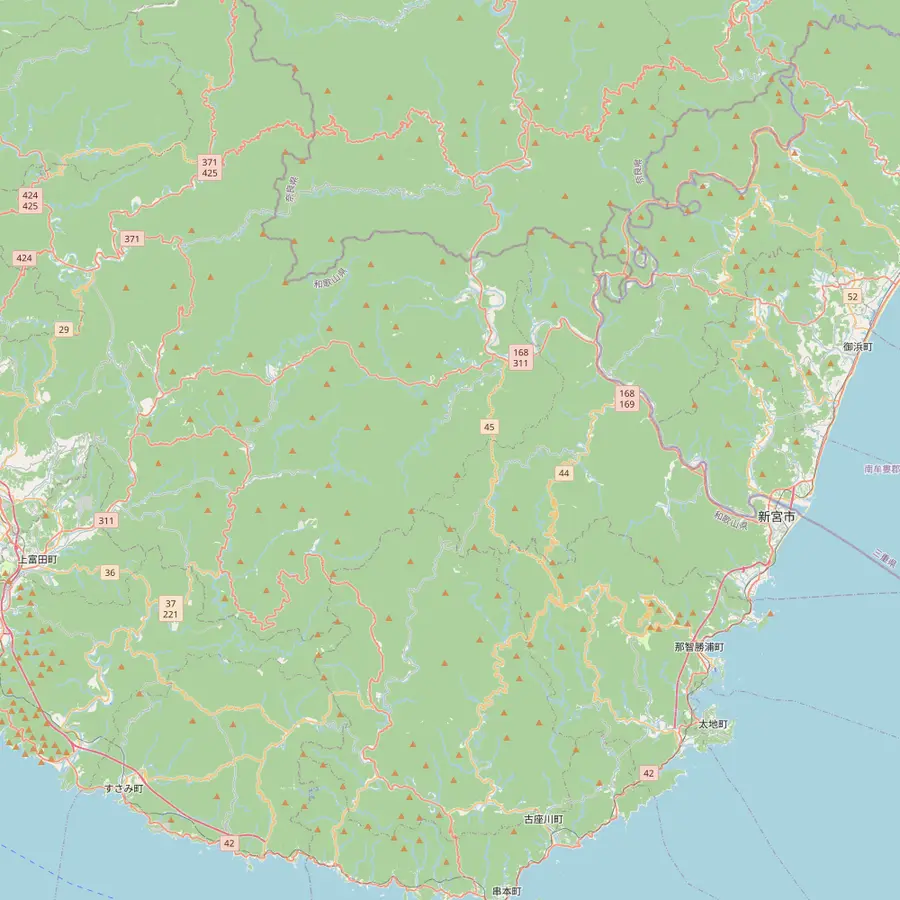 1Takijiri-oji2Takahara3Chikatsuyu-oji4Tsugizakura-oji5Hosshinmon-oji6Kumano Hongu Taisha7Koguchi8Kumano Nachi Taisha9Hayatama Taisha
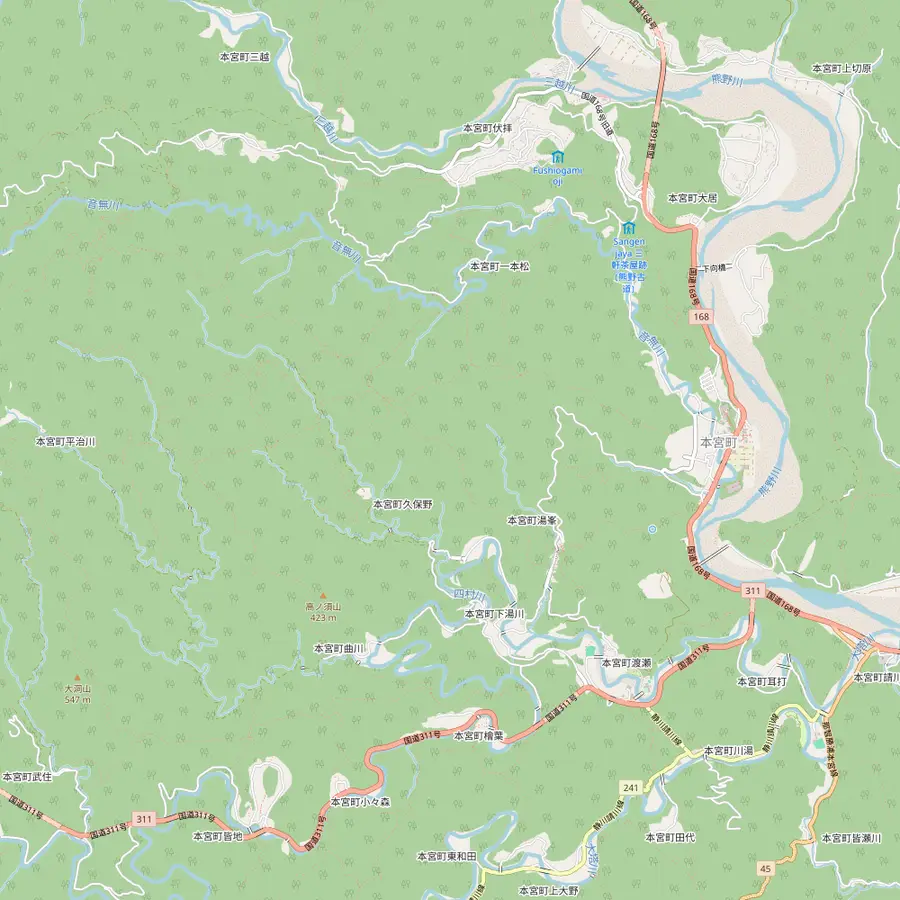 10Fushiogami-oji11Oyunohara12Yunomine Onsen13Wataze Onsen14Kawayu Onsen
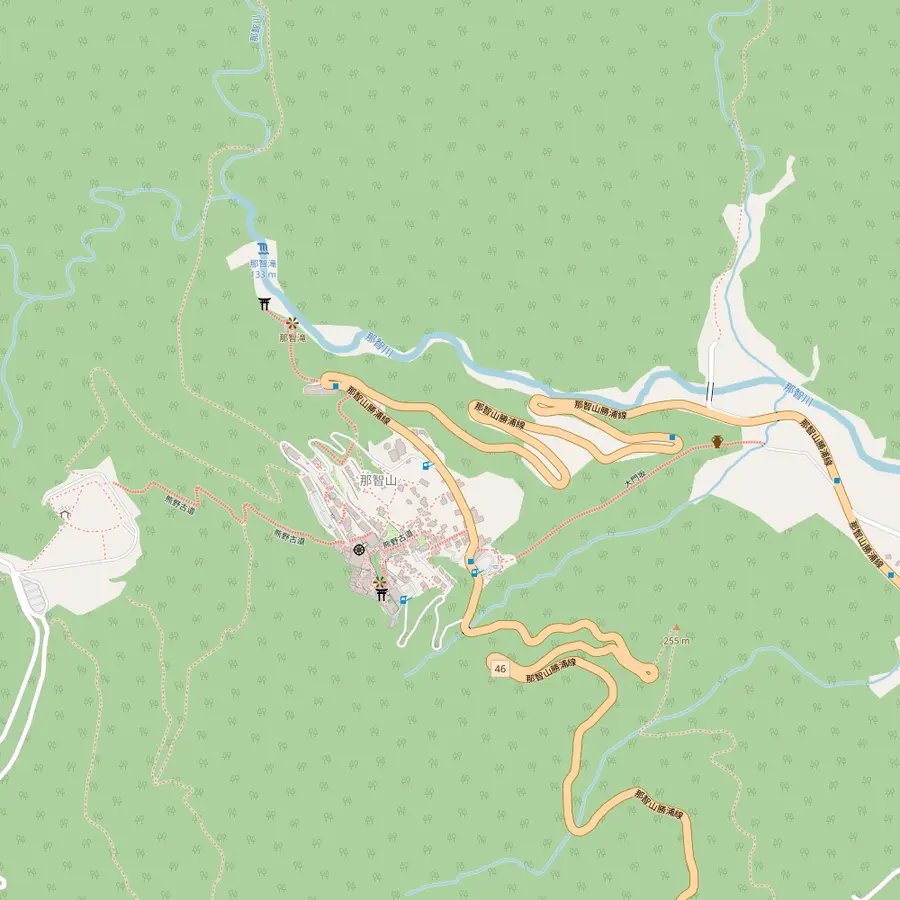 15Daimon-zaka16Seiganto-ji17Nachi Falls (Hiro-jinja)
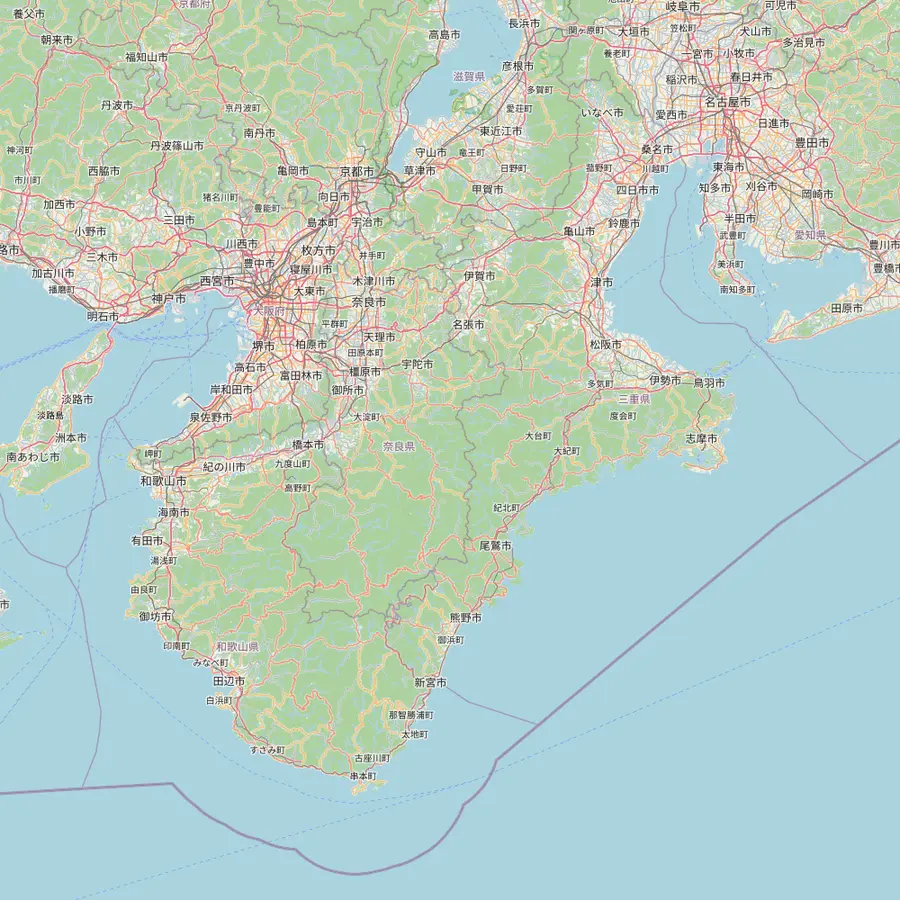 18Osaka (Shinsaibashi)19Kyoto20Koyasan21Kii-Tanabe22Shingu23Kii-Katsuura24Ise
- 1Takijiri-oji
The usual first day of a Nakahechi walk starts here, beside the Kumano Kodo Kan pilgrimage center.2223
In Google Maps ↗ - 2Takahara
A steep climb of about 4 km from Takijiri-oji, through native and planted forest.2425
In Google Maps ↗ - 3Chikatsuyu-oji
An old oji in a basin at about 300 m, at the end of the classic first day; the village has about 450 people.2627
In Google Maps ↗ - 4Tsugizakura-oji
Named for a grafted cherry; some of its cedars are 8 m round and thought to be up to 800 years old.28
In Google Maps ↗ - 5Hosshinmon-oji
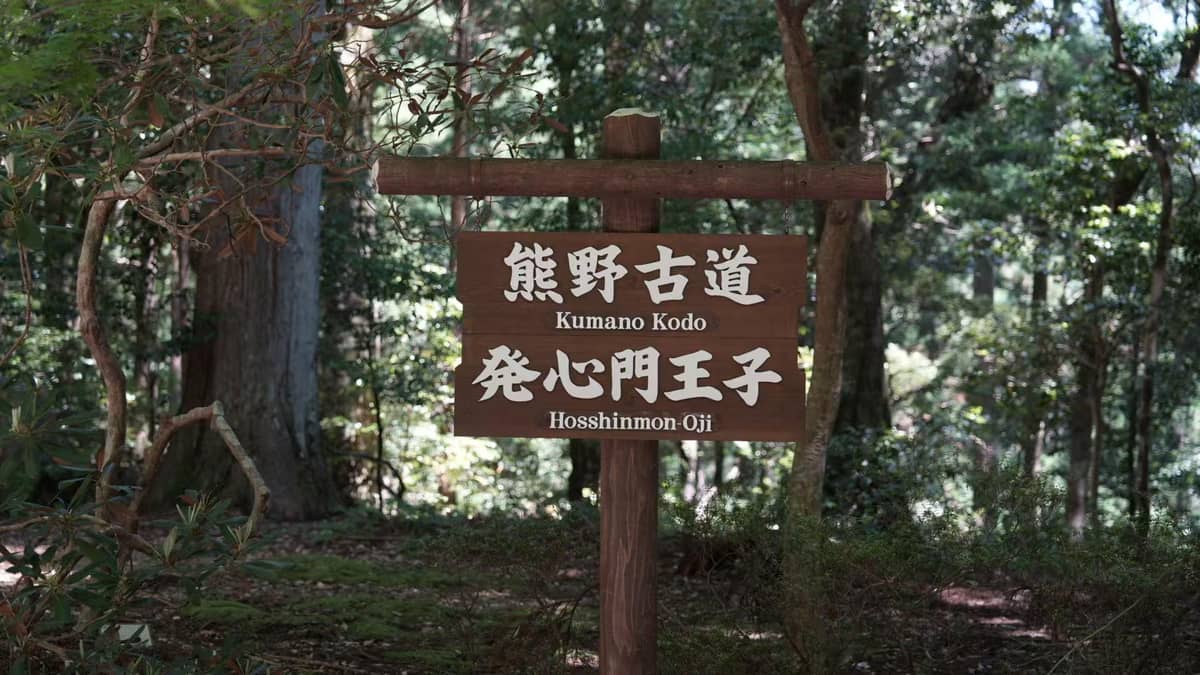
Start of the popular 7 km half-day walk to Kumano Hongu Taisha; there is nowhere to stay here.2930
In Google Maps ↗ - 6Kumano Hongu Taisha
Head shrine of over 3,000 Kumano shrines across Japan; the grounds are free.3132
In Google Maps ↗ - 7Koguchi
Overnight stop between the Kogumotori-goe and the Ogumotori-goe on the way to Nachi.3334
In Google Maps ↗ - 8Kumano Nachi Taisha
Halfway up Nachi Mountain at about 350 m, about 10 km inland from Katsuura.3536
In Google Maps ↗ - 9Hayatama Taisha
At the mouth of the Kumano-gawa, where the river meets the Pacific.37
In Google Maps ↗ - 10Fushiogami-oji
Where pilgrims fell to their knees at their first sight of the grand shrine.38
In Google Maps ↗ - 11Oyunohara
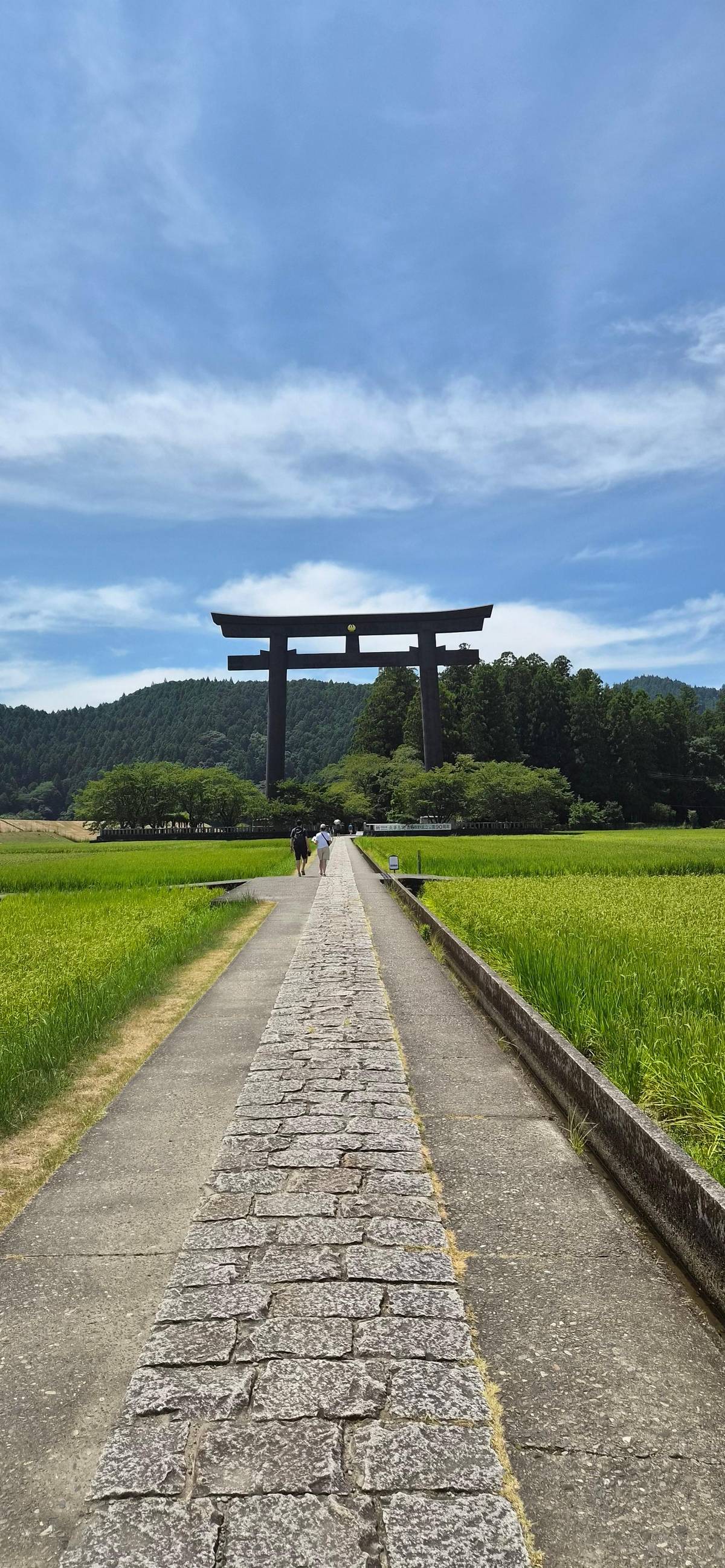
The original shrine site on a sandbank, marked by a steel torii 33.9 m tall.3940
In Google Maps ↗ - 12Yunomine Onsen
A hot spring found about 1,800 years ago, with the Tsuboyu bath.4142
In Google Maps ↗ - 13Wataze Onsen
The largest open-air hot spring bath in western Japan.43
In Google Maps ↗ - 14Kawayu Onsen
Hot water rises through the river bed; in winter a huge river bath is dug.4445
In Google Maps ↗ - 15Daimon-zaka
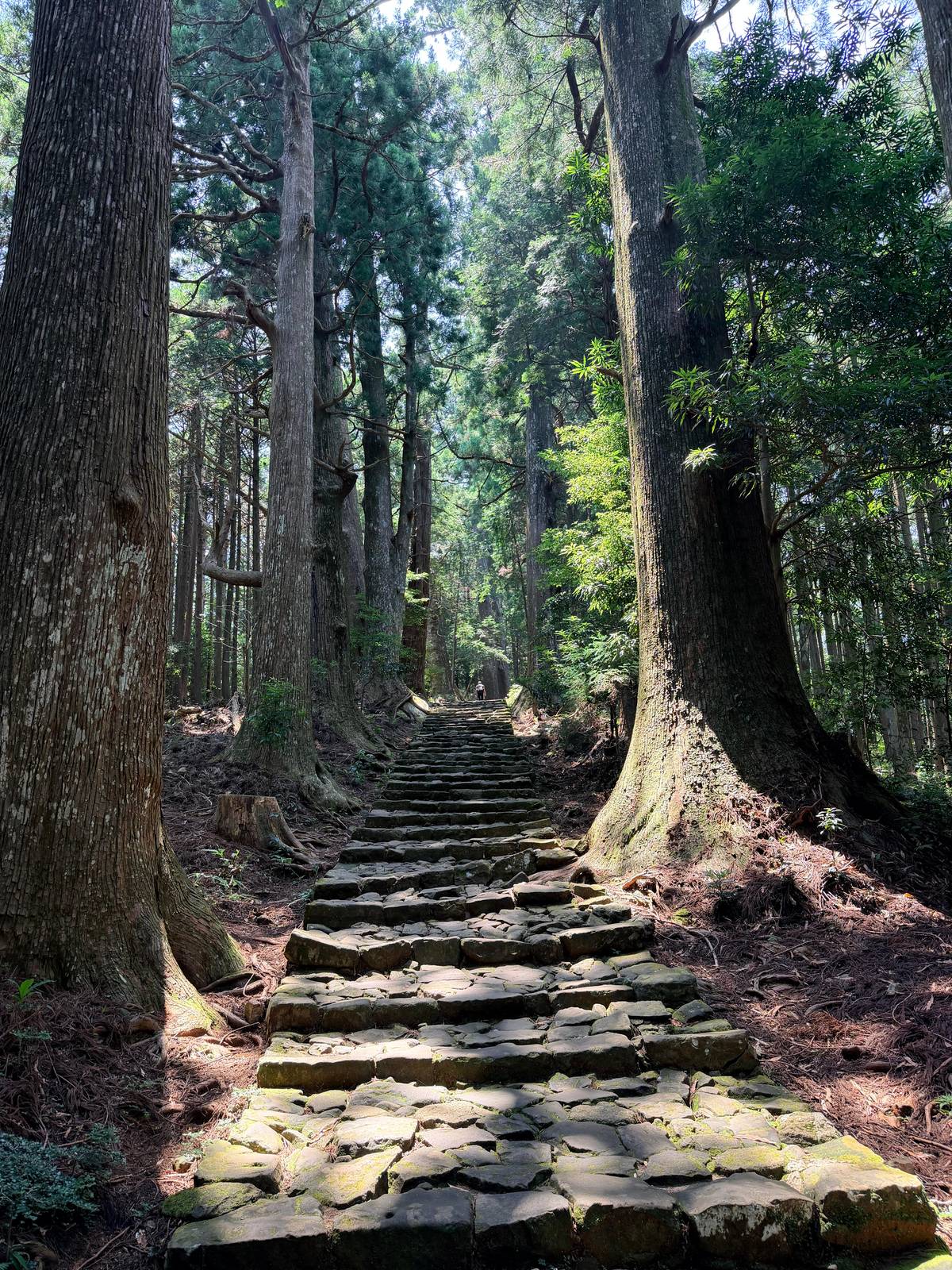
About 600 m of stone stairs, 267 steps, under old cedars.4647
In Google Maps ↗ - 16Seiganto-ji
A Tendai temple and the first stop of the Saigoku pilgrimage to 33 Kannon.48
In Google Maps ↗ - 17Nachi Falls (Hiro-jinja)
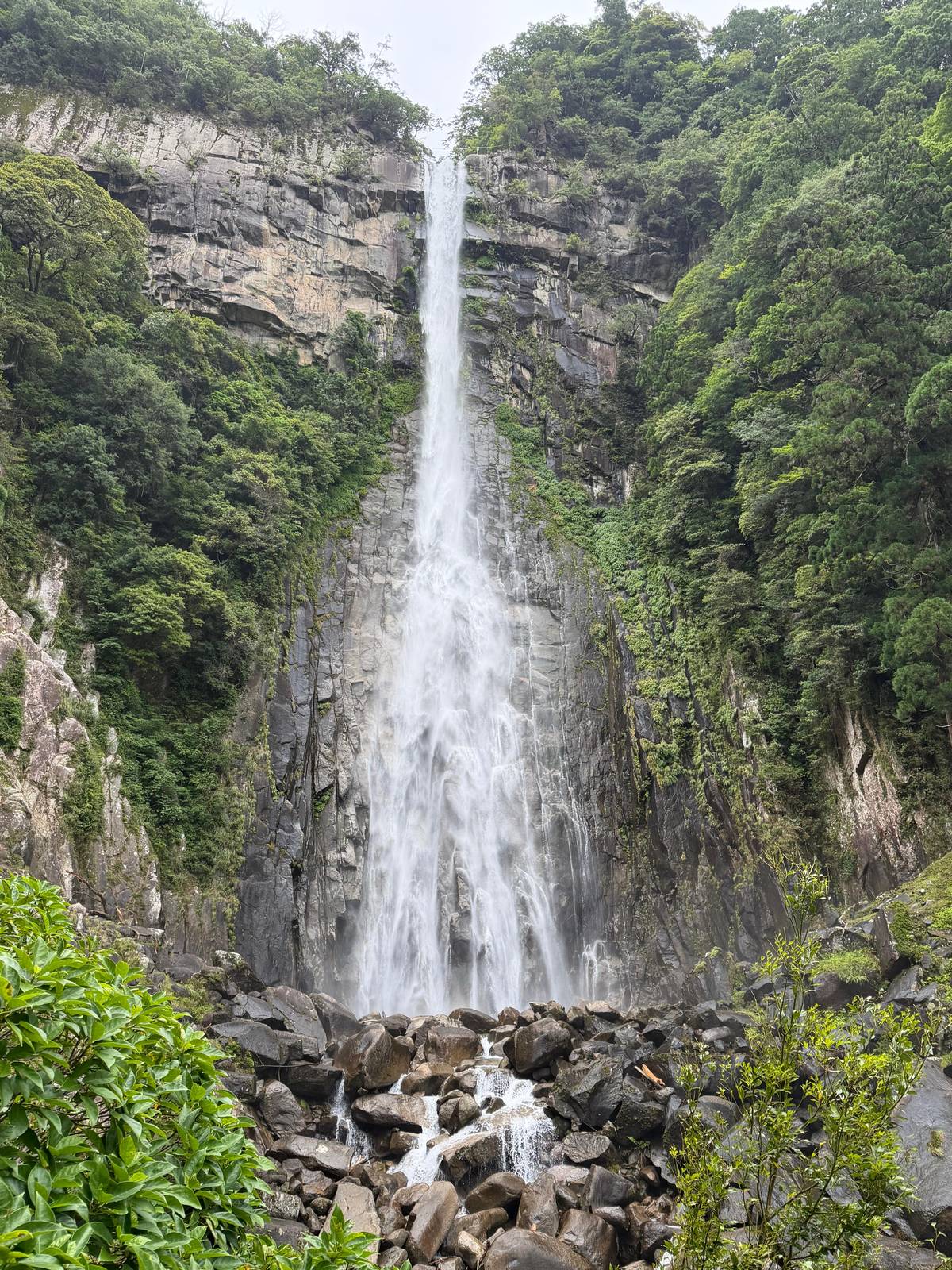
133 m high, worshipped directly with no shrine hall.4950
In Google Maps ↗ - 18Osaka (Shinsaibashi)
The day tour leaves from Q Plaza Shinsaibashi or the National Bunraku Theatre.
In Google Maps ↗ - 19Kyoto
The Kuroshio reaches Kii-Tanabe from Kyoto in 2 hrs 35 min.51
In Google Maps ↗ - 20Koyasan
Start of the Kohechi; reached from Namba on Nankai trains and a cable car.5253
In Google Maps ↗ - 21Kii-Tanabe
Gateway to the Nakahechi; trail buses leave from stop No. 2.5455
In Google Maps ↗ - 22Shingu
Home of Hayatama Taisha and a bus hub towards Hongu.3756
In Google Maps ↗ - 23Kii-Katsuura
Buses climb to Nachisan in about 30 minutes.57
In Google Maps ↗ - 24Ise
Start of the Iseji, about 170 km along the east coast.58
In Google Maps ↗
Checklist
For stamp collectors
01
Carry
- A credential or stamp book
- A plastic sleeve to keep the booklet dry
- Proof of the Camino if you have walked it
02
Remember
- Close the box and the pad after use
- Photo the stamp if the pad is dry
- No taiko ceremony on 1 to 3 January
Video
Are you a DUAL PILGRIM?
The video loads only when you tap play.
The double pilgrimage with the Camino
A Dual Pilgrim is someone who has walked both the Kumano Kodo and the Way of St. James to Santiago de Compostela.59 The programme began on 1 February 2015, and the bureau describes the two as the only pilgrimage routes registered as UNESCO World Heritage.6061
For the Camino side you need at least the last 100 km on foot or on horseback, or the last 200 km by bicycle.62 For the Kumano Kodo there are five ways to qualify.63 They include walking from Takijiri-oji to Kumano Hongu Taisha, about 38 km, or from Kumano Nachi Taisha to or from Hongu, about 30 km, or from Koyasan to Hongu, about 65 km.14
The shortest option is the walk from Hosshinmon-oji to Kumano Hongu Taisha, about 7 km, plus visits to Kumano Hayatama Taisha and Kumano Nachi Taisha.14 Only walking counts on the Kumano Kodo, not bicycles or horses, but using a bus for part of the way is accepted.6465 The order of the two pilgrimages does not matter.66
Stamps on the other routes
The Nakahechi is where most walkers collect, but the other routes have stamps too. On the Kohechi option, Koyasan to or from Hongu over about 65 km, you collect one stamp within each listed section rather than at every shrine.67 Remember that most Kohechi stamps are black, not red.2
The coastal Ohechi has its own route into the double pilgrimage. The fifth option combines the Ogigahama Mizugori site and Tokei-jinja in Tanabe with two or more sites on the Ohechi, plus visits to Hayatama, Nachi and Hongu.68 It suits walkers who prefer short coastal passes to long mountain days.
Whichever route you take, finish at Kumano Hongu Taisha, where the completion stamp is kept.3 It is worth planning your last day so you arrive there in daylight, with time to climb the steps, find the stamp and walk down to Oyunohara before the shrine office closes at 17:00.32
Registering and what you receive
When both walks are done, you register in person. In Japan that is at the Kumano Hongu Heritage Center near the grand shrine or at the Tanabe Tourist Information Center, which opens 9:00 to 18:00.8 Bring proof of the Camino, where a digital copy or photo of your credential is enough, and your completed Kumano Kodo stamp credential.69
Registered Dual Pilgrims receive a limited-edition pin badge and can choose to be listed on the programme's website.9 The badge and certificate are not mailed: you must collect them at a registration site.70 By 31 August 2026, 17,683 pilgrims from 85 countries had registered.71
Kumano Hongu Taisha adds a special touch: a short taiko drum ceremony for registered Dual Pilgrims.10 It is not possible over the busy New Year holiday of 1 to 3 January.72 Keep in mind that the prefecture's own stamp booklet does not qualify for this programme.19
Collecting stamps on a day trip from Osaka
The coach day trip sold on this site includes a pilgrimage stamp booklet, and its route passes many stamp sites in one day: Kumano Hongu Taisha, Kumano Nachi Taisha with Seiganto-ji and Nachi Falls, and Hayatama Taisha. For a collector it is the quickest way to fill several pages.
Be clear about what it does not do. The shortest Kumano option for the double pilgrimage needs the walk from Hosshinmon-oji to Kumano Hongu Taisha, about 7 km on foot, and the day trip's walking is the Daimon-zaka section at Nachi, listed at 20 to 40 minutes.14 So the tour alone does not complete the Kumano side.
It can still be part of the plan. The stamps for that option are at Hosshinmon-oji, Mizunomi-oji, Fushiogami-oji, Haraido-oji, Kumano Hongu Taisha, Oyunohara, Hayatama, Nachi, Seiganto-ji and Hiro-jinja at the falls.73 The tour makes the visits to Hayatama and Nachi that this option asks for, and a bus for part of the way is accepted; whether stamps gathered on separate days count is a question to ask at the registration desk before you plan around it.65
Your day in Kumano
Three shrines and the cedar steps in one day.
Pick a date, meet in central Osaka, and cancel free up to 24 hours before.


You ask,we answer.
Where are the stamps on the trail?
In small wooden boxes. They stand about waist high at oji shrines and main sites along the routes.1
What colour ink should I use?
Red on the Nakahechi. Koyasan, most Kohechi, Totsukawa-area and Ohechi stamps are black.2
Does the credential cost anything?
No, it is free. The completion stamp of the Kumano Kodo is kept at Kumano Hongu Taisha.3
Is there a certificate for the Kumano Kodo alone?
Not in the double pilgrimage. The prefecture's own booklet scheme gives a certificate on the spot once checked.1817
What is the shortest qualifying walk?
Hosshinmon-oji to Hongu, about 7 km. Plus visits to Kumano Hayatama Taisha and Kumano Nachi Taisha.14
Can the badge be posted to me?
No. You collect it in person at a registration site in Hongu, Tanabe or Santiago.70
What if the ink pad is dry?
Take a photo of the stamp. The bureau suggests this rather than using other ink or paint.6
Sources
Sources and evidence
- 1Tanabe City Kumano Tourism BureauStamps on the Kumano Kodo↩
- 2Tanabe City Kumano Tourism BureauStamps on the Kumano Kodo↩
- 3Tanabe City Kumano Tourism BureauDual Pilgrim↩
- 4Tanabe City Kumano Tourism BureauStamps on the Kumano Kodo↩
- 5Tanabe City Kumano Tourism BureauStamps on the Kumano Kodo↩
- 6Tanabe City Kumano Tourism BureauStamps on the Kumano Kodo↩
- 7Tanabe City Kumano Tourism BureauStamps on the Kumano Kodo↩
- 8Tanabe City Kumano Tourism BureauDual Pilgrim↩
- 9Tanabe City Kumano Tourism BureauDual Pilgrim↩
- 10Tanabe City Kumano Tourism BureauDual Pilgrim↩
- 11Tanabe City Kumano Tourism BureauStamps on the Kumano Kodo↩
- 12Tanabe City Kumano Tourism BureauStamps on the Kumano Kodo↩
- 13Tanabe City Kumano Tourism BureauStamps on the Kumano Kodo↩
- 14Tanabe City Kumano Tourism BureauDual Pilgrim↩
- 15Tanabe City Kumano Tourism BureauStamps on the Kumano Kodo↩
- 16Tanabe City Kumano Tourism BureauStamps on the Kumano Kodo↩
- 17Tanabe City Kumano Tourism BureauStamps on the Kumano Kodo↩
- 18Tanabe City Kumano Tourism BureauStamps on the Kumano Kodo↩
- 19Tanabe City Kumano Tourism BureauStamps on the Kumano Kodo↩
- 20Tanabe City Kumano Tourism BureauDual Pilgrim↩
- 21Tanabe City Kumano Tourism BureauStamps on the Kumano Kodo↩
- 22Tanabe City Kumano Tourism BureauTakijiri-oji to Tsugizakura-oji↩
- 23Tanabe City Kumano Tourism BureauTakijiri-oji to Tsugizakura-oji↩
- 24Tanabe City Kumano Tourism BureauTakijiri-oji to Takahara↩
- 25Tanabe City Kumano Tourism BureauTakijiri-oji to Takahara↩
- 26Tanabe City Kumano Tourism BureauHistory & Oji↩
- 27Tanabe City Kumano Tourism BureauChikatsuyu↩
- 28Tanabe City Kumano Tourism BureauHistory & Oji↩
- 29Tanabe City Kumano Tourism BureauTsugizakura-oji to Kumano Hongu Taisha↩
- 30Tanabe City Kumano Tourism BureauHosshinmon-oji to Kumano Hongu Taisha↩
- 31Tanabe City Kumano Tourism BureauKumano Hongu Taisha↩
- 32Tanabe City Kumano Tourism BureauKumano Hongu Taisha↩
- 33Tanabe City Kumano Tourism BureauSuggested Walks↩
- 34Tanabe City Kumano Tourism BureauSuggested Walks↩
- 35Tanabe City Kumano Tourism BureauKumano Nachi Taisha↩
- 36Tanabe City Kumano Tourism BureauKumano Nachi Taisha↩
- 37Tanabe City Kumano Tourism BureauKumano Hayatama Taisha↩
- 38Tanabe City Kumano Tourism BureauHosshinmon-oji to Kumano Hongu Taisha↩
- 39Tanabe City Kumano Tourism BureauKumano Hongu Taisha↩
- 40Tanabe City Kumano Tourism BureauKumano Hongu Taisha↩
- 41Tanabe City Kumano Tourism BureauYunomine Onsen↩
- 42Tanabe City Kumano Tourism BureauYunomine Onsen↩
- 43Tanabe City Kumano Tourism BureauWataze/Watarase Onsen↩
- 44Tanabe City Kumano Tourism BureauKawayu Onsen↩
- 45Tanabe City Kumano Tourism BureauKawayu Onsen↩
- 46Tanabe City Kumano Tourism BureauDaimon-zaka↩
- 47Tanabe City Kumano Tourism BureauDaimon-zaka↩
- 48Tanabe City Kumano Tourism BureauKumano Nachi Taisha↩
- 49Tanabe City Kumano Tourism BureauKumano Nachi Taisha↩
- 50Kumano Nachi Taisha飛瀧神社(那智御瀧) (Hiro-jinja, Nachi Falls)↩
- 51Tanabe City Kumano Tourism BureauTransport: Train↩
- 52Tanabe City Kumano Tourism BureauKohechi↩
- 53Tanabe City Kumano Tourism BureauTransport: Train↩
- 54Tanabe City Kumano Tourism BureauKumano Kodo↩
- 55Tanabe City Kumano Tourism BureauTanabe↩
- 56Tanabe City Kumano Tourism BureauTransport: Bus↩
- 57Kumano Nachi Taishaアクセス (Access)↩
- 58Tanabe City Kumano Tourism BureauIseji↩
- 59Tanabe City Kumano Tourism BureauDual Pilgrim↩
- 60Tanabe City Kumano Tourism BureauDual Pilgrim↩
- 61Tanabe City Kumano Tourism BureauDual Pilgrim↩
- 62Tanabe City Kumano Tourism BureauDual Pilgrim↩
- 63Tanabe City Kumano Tourism BureauDual Pilgrim↩
- 64Tanabe City Kumano Tourism BureauDual Pilgrim↩
- 65Tanabe City Kumano Tourism BureauDual Pilgrim↩
- 66Tanabe City Kumano Tourism BureauDual Pilgrim↩
- 67Tanabe City Kumano Tourism BureauDual Pilgrim↩
- 68Tanabe City Kumano Tourism BureauDual Pilgrim↩
- 69Tanabe City Kumano Tourism BureauDual Pilgrim↩
- 70Tanabe City Kumano Tourism BureauDual Pilgrim↩
- 71Tanabe City Kumano Tourism BureauDual Pilgrim↩
- 72Tanabe City Kumano Tourism BureauDual Pilgrim↩
- 73Tanabe City Kumano Tourism BureauDual Pilgrim↩