 Private visit
Guides
Language
EnglishCurrency
US dollar · $Your currency applies on GetYourGuide too.
Guide · The shrines
Kumano Hongu Taisha and the other two Grand Shrines
Kumano Hongu Taisha in the mountains, Nachi beside Japan's tallest waterfall and Hayatama at the river mouth: what each shrine is, what it costs to visit and how to reach all three.
Check availabilityfrom $103 · cancellation is free
Editorial team, kumanokodohike.comUpdated October 22, 20266 minutes to read63 sources
The short version
Three shrines, one pilgrimage
Kumano Sanzan is the collective name for three Grand Shrines in the south-east of the Kii Mountains: Kumano Hongu Taisha, Kumano Hayatama Taisha and Kumano Nachi Taisha.1 Every Kumano Kodo route was laid out to reach them, and for centuries a pilgrimage meant paying respects at all three.
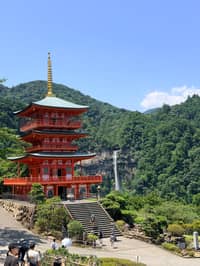
The three sit far apart. Hongu lies inland on the Kumano-gawa, deep in the mountains. Hayatama stands in the town of Shingu at the river mouth.6 Nachi rises on a mountainside above the coast, about 10 km inland from Katsuura.7 Pilgrims once travelled from Hongu down to Hayatama by boat on the river.8
Today these shrines are part of the World Heritage property inscribed on 7 July 2004.9 They are working shrines, not museums, so keep your voice low, follow the signs on where photos are allowed, and give way to worshippers at the halls.
The shrine year
Festival dates to plan around
-
6 February
Oto Matsuri
Fire festival at Kamikura-jinja in Shingu.10
-
13 April
Walk to Oyunohara
Participants walk the Dainichi-goe from Yunomine.11
-
13 to 15 April
Hongu spring festival
The great festival of Kumano Hongu Taisha.12
-
16 October
Mifune Matsuri
Nine boats race up the Kumano-gawa.13
-
23 April 2028
Hayatama anniversary
The shrine's 1,900th founding festival.14
Kumano Hongu Taisha, the heart of the network
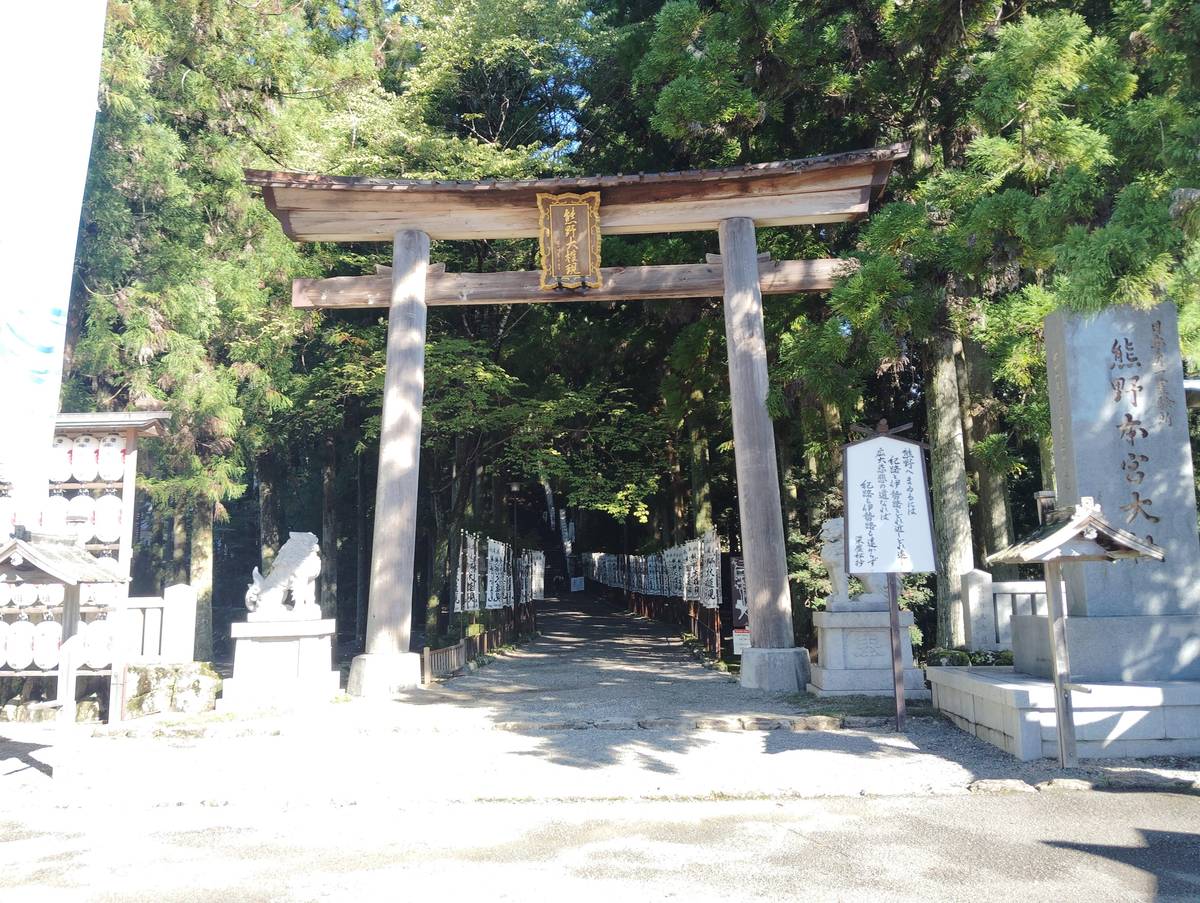
Kumano Hongu Taisha is the head shrine of more than 3,000 Kumano shrines across Japan.2 A long flight of 158 stone steps climbs from the torii to the shrine buildings, set on a ridge among cedar and cypress.15 Entry to the grounds is free and the shrine office is open from 8:00 to 17:00.3
The shrine has not always stood here. It began at Oyunohara, a sandbank where the Kumano and Otonashi rivers meet.16 A severe flood in 1889 destroyed many of its buildings, and what could be saved was rebuilt on the higher ground you climb to today.17 The old site is a short walk away and well worth it.
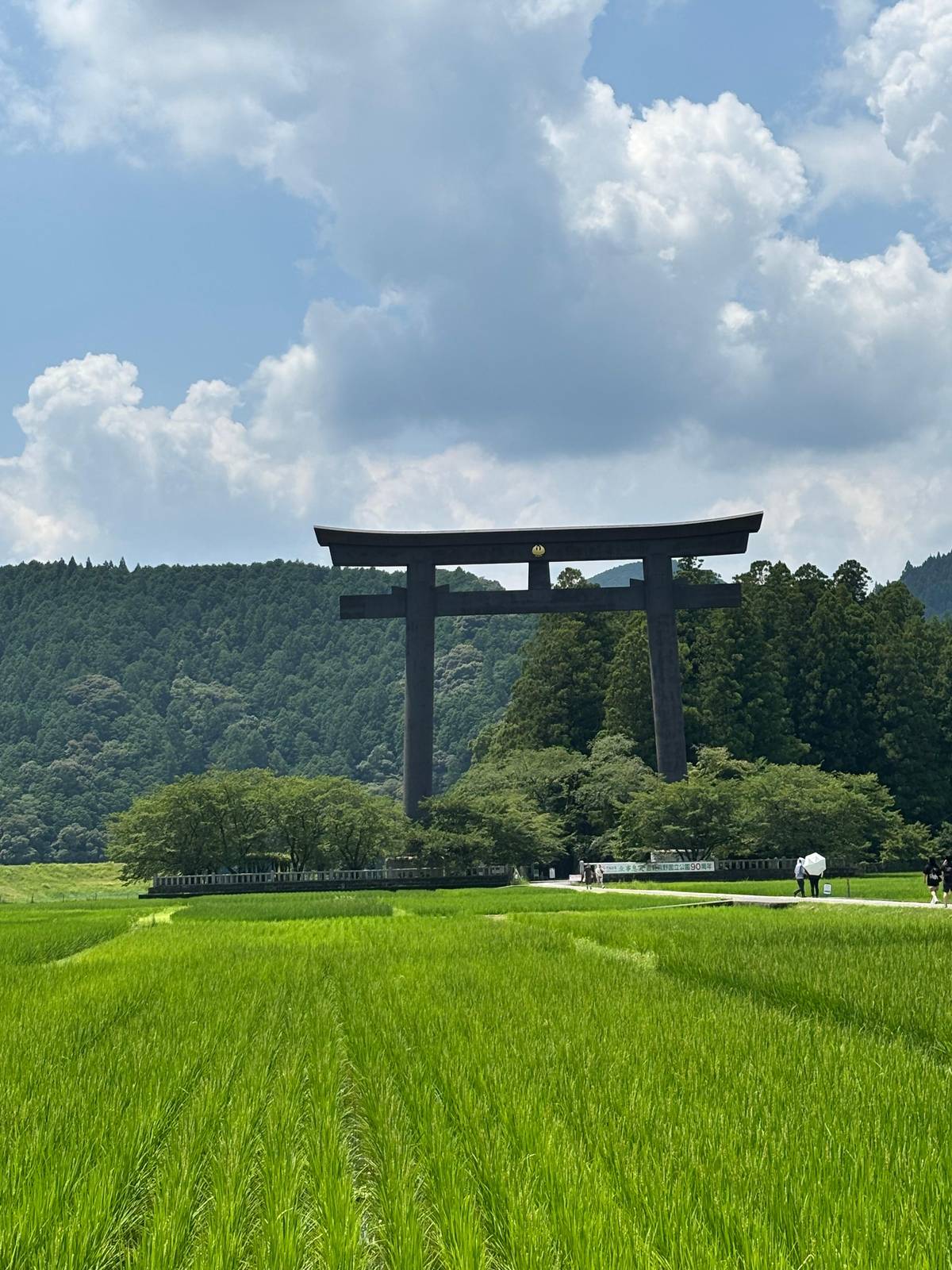
At Oyunohara stands the steel torii erected in 2000, which the bureau calls the largest in the world at 33.9 m tall and 42 m wide.1819 The treasure hall up at the shrine costs 300 yen for adults and 100 yen for ages 12 to 15, with children 11 and under free, open 9:00 to 16:00.20
The three side by side
Hongu, Nachi and Hayatama compared
| Shrine | Setting | Grounds | Highlight |
|---|---|---|---|
| Hongu | Inland on the Kumano-gawa | Free, office 8:00 to 17:00 | Torii 33.9 m tall at Oyunohara |
| Nachi | Mountainside at about 350 m | Free, office 6:00 to 16:30 | Waterfall 133 m high |
| Hayatama | River mouth in Shingu | Not listed | Sacred Nagi tree |
From the Tanabe City Kumano Tourism Bureau's World Heritage pages, as read in October 2026.3194215622
One shrine with a guide
Short guided visits at each shrine
Private visit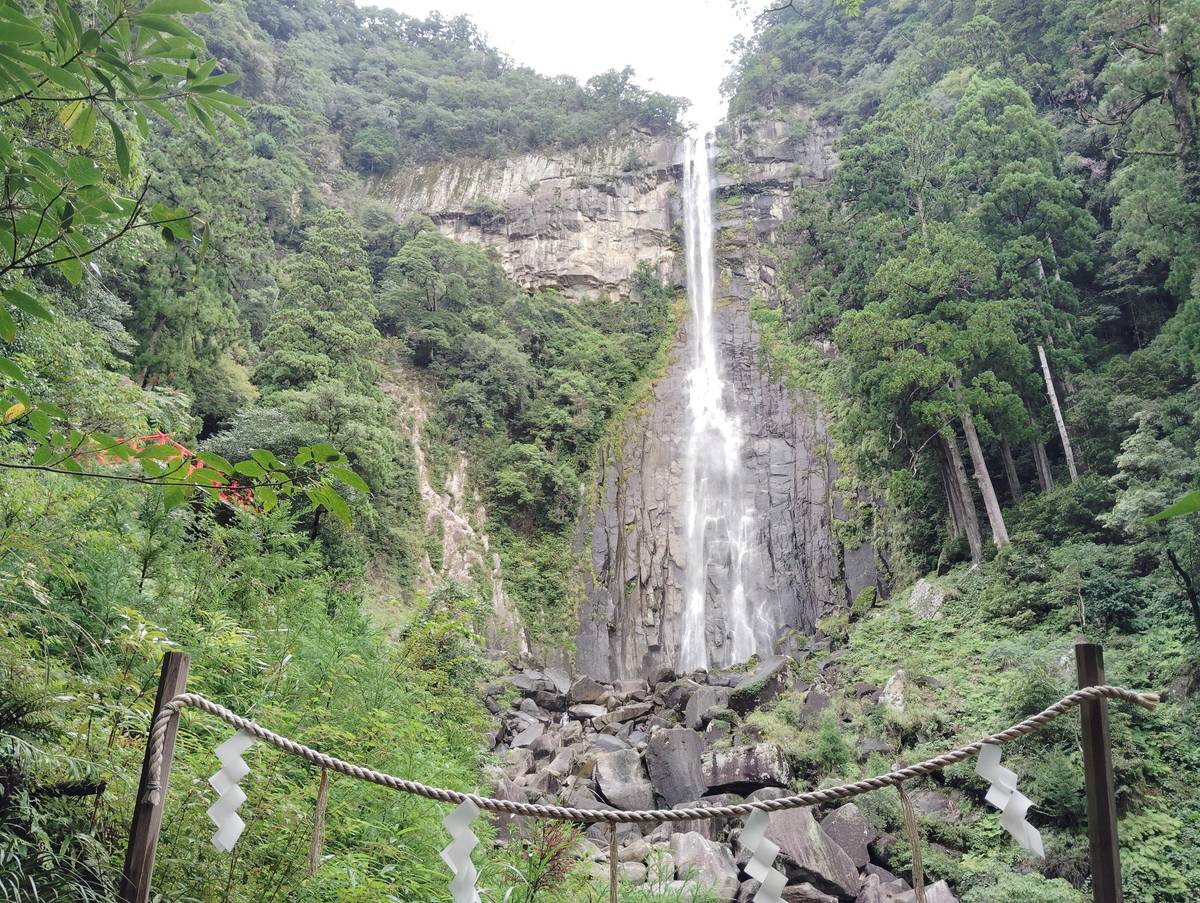 Private visit
 Private visit
Decision helper
Which shrine should you prioritise?
Pick what you most want to see
Hongu
Head shrine of over 3,000 Kumano shrines.2
Nachi
Nachi-no-Otaki falls 133 m beside the shrine.5
Hayatama
Vermilion halls and a sacred Nagi tree centuries old.22
Nachi via Daimon-zaka
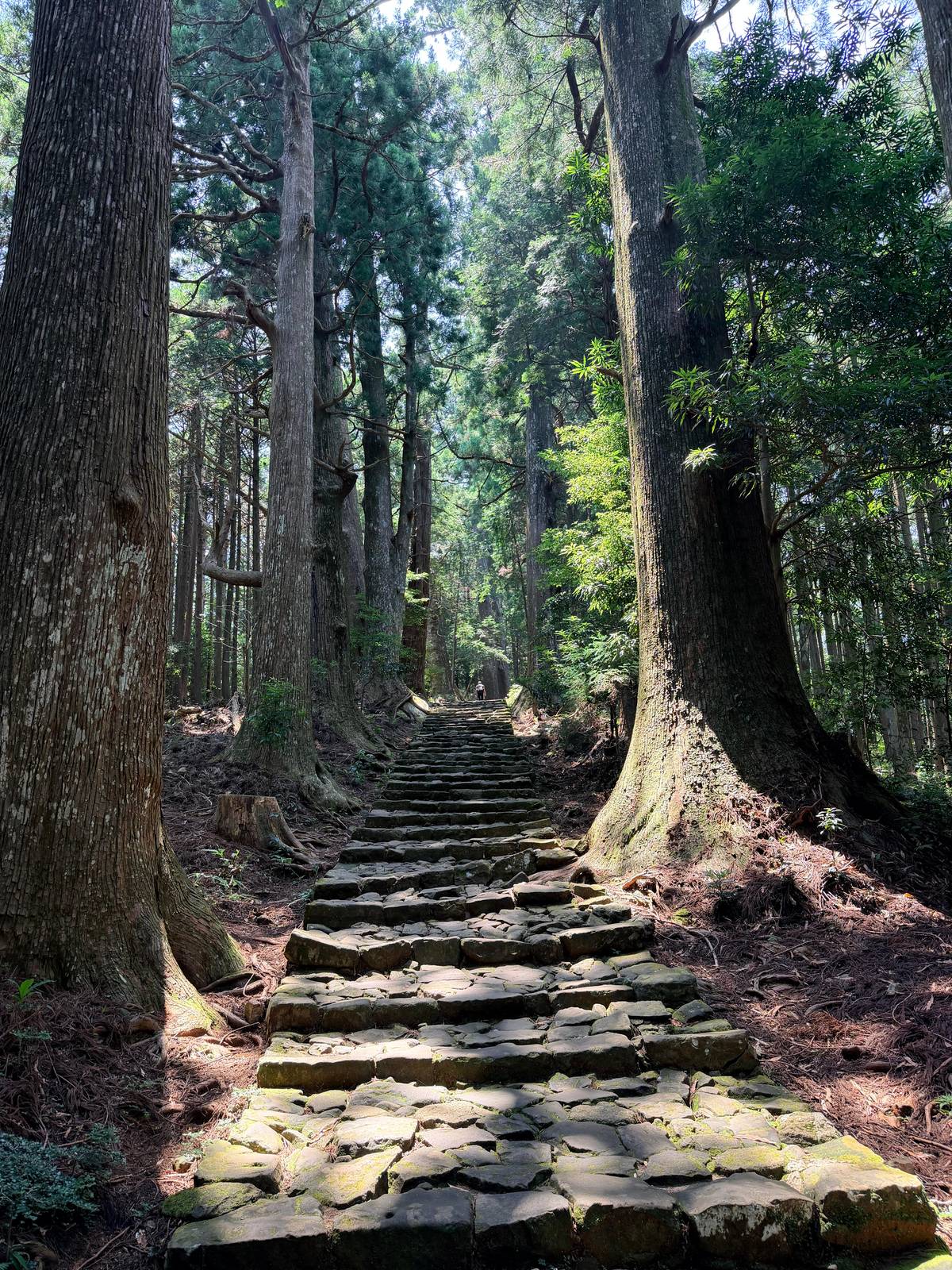
About 600 m of stone stairs with 267 steps under cedars.23
The Osaka coach day
Hongu, Nachi and Hayatama with entry fees included.
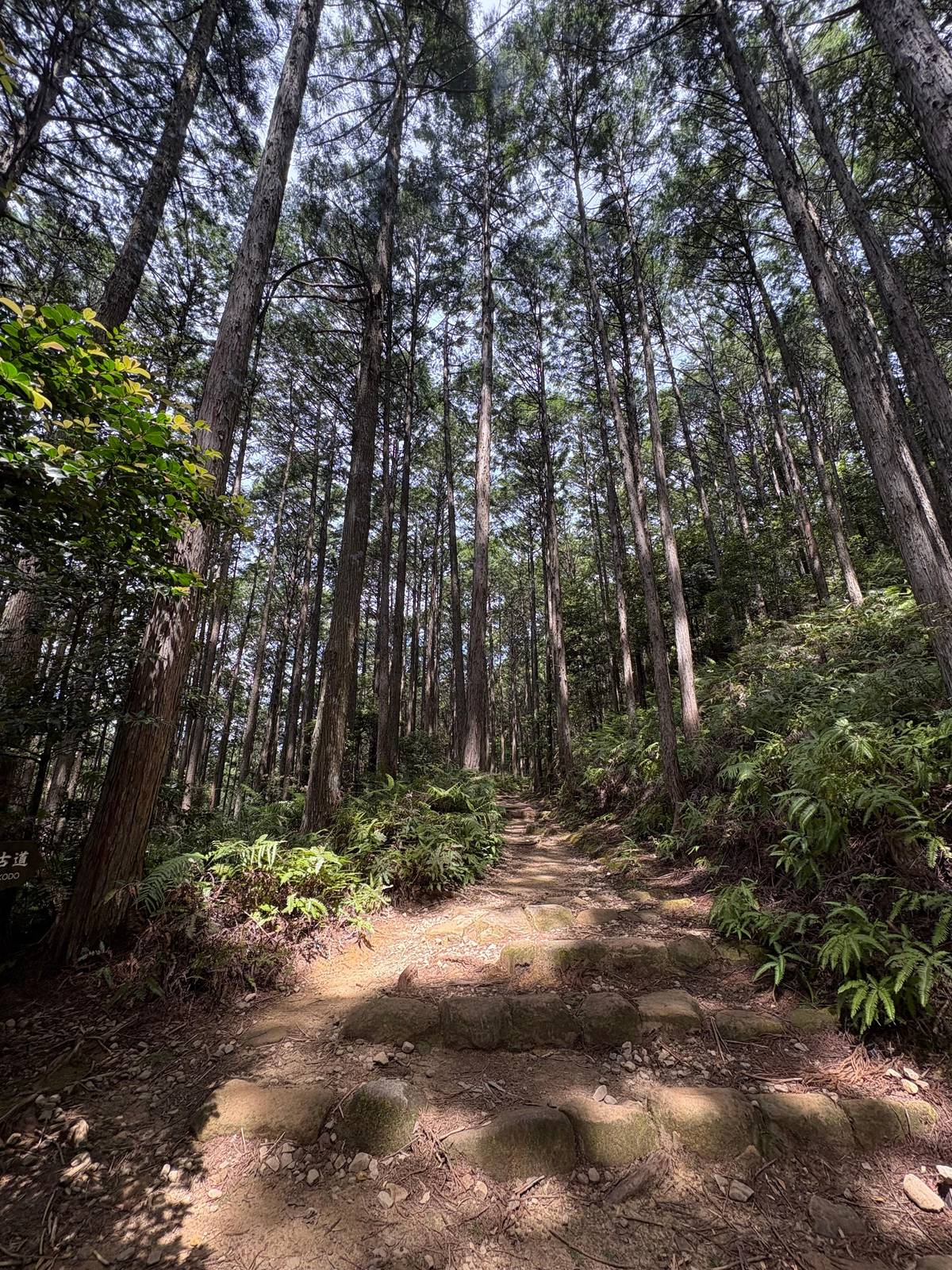
To visit these shrines pilgrims used the Kumano ancient roads, which are lined with 99Oji (small shrines), travelling 300km from Kyoto to Kumano.
Visiting Hongu: customs, stamps and festivals
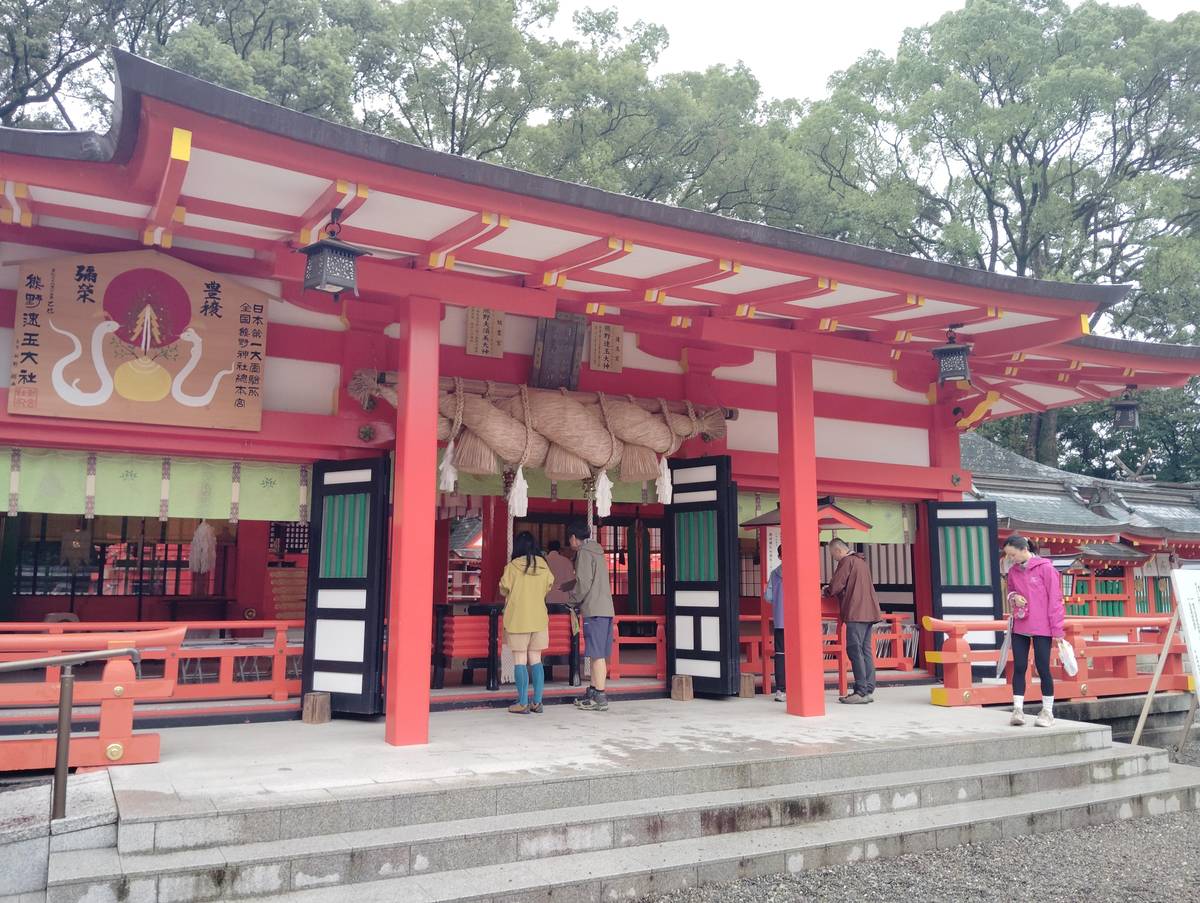
The shrine explains the formal way to pray at the main hall: make an offering in the box, bow twice, clap twice and bow once more.25 Nobody will mind if you simply bow quietly, but following the custom is a nice gesture after a long walk or a long drive. Wash your hands and mouth at the water basin first, keep to the sides of the path in front of the main hall, and take off your hat before you pray.
Hongu is also where pilgrims finish. The completion stamp of the Kumano Kodo is kept at Kumano Hongu Taisha, and registered double pilgrims who have also walked the Camino de Santiago can join a short taiko drum ceremony there.2627 That ceremony is not possible over the New Year holiday of 1 to 3 January.28
Come in spring for the shrine's great festival, held from 13 to 15 April every year.12 On its first day participants walk the Dainichi-goe, the short trail between Yunomine Onsen and Hongu, as part of the ritual.11 Expect crowds, closed areas and a wonderful atmosphere.
Map
The Nakahechi, its shrines and the way in from Osaka
The trail from Takijiri-oji to the three Grand Shrines, the Hongu area with its hot springs, the Nachi sanctuary up close, then the whole peninsula with the stations you arrive at.
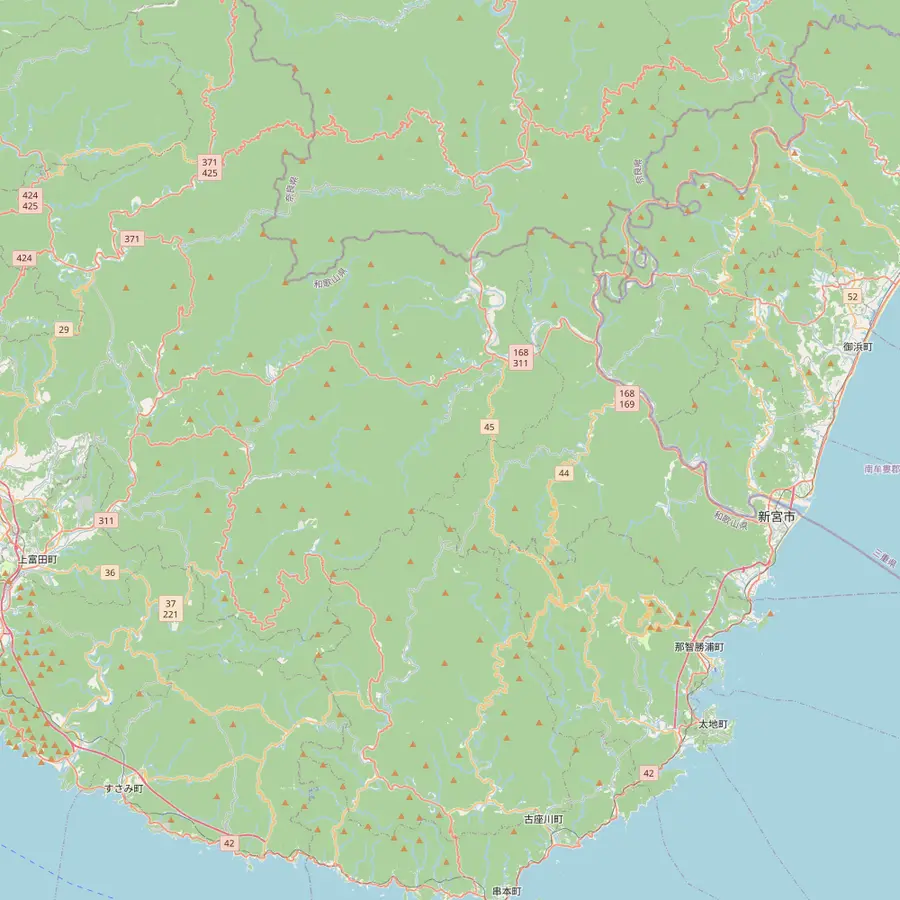 1Takijiri-oji2Takahara3Chikatsuyu-oji4Tsugizakura-oji5Hosshinmon-oji6Kumano Hongu Taisha7Koguchi8Kumano Nachi Taisha9Hayatama Taisha
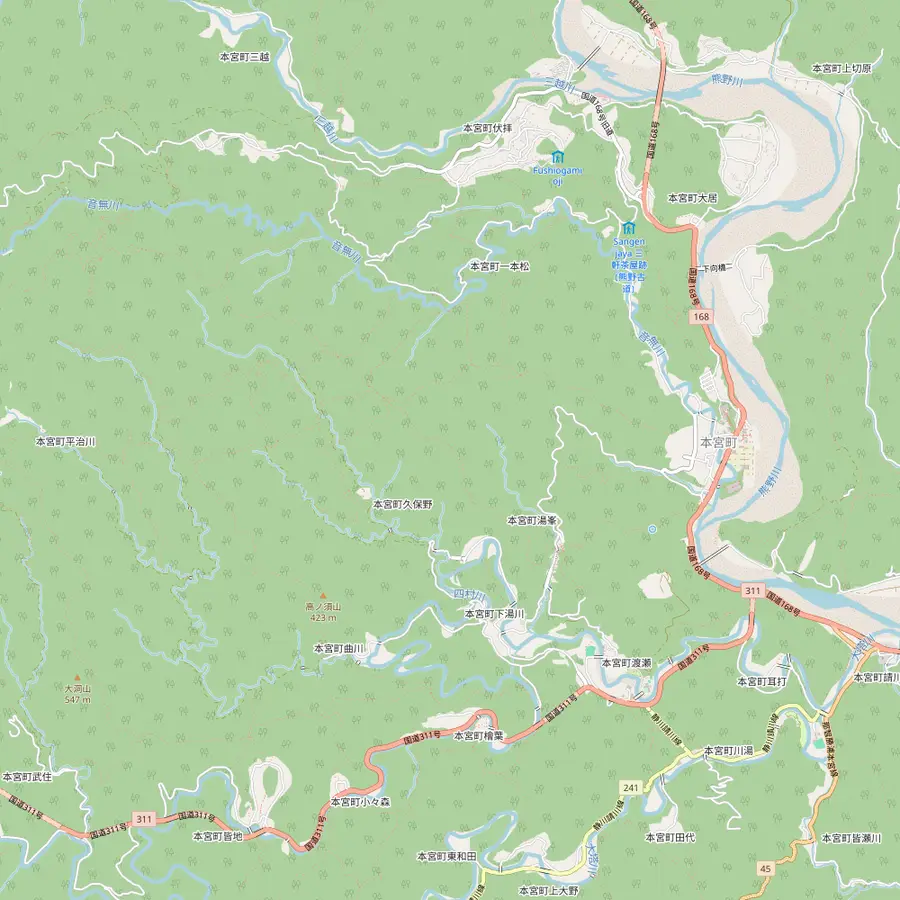 10Fushiogami-oji11Oyunohara12Yunomine Onsen13Wataze Onsen14Kawayu Onsen
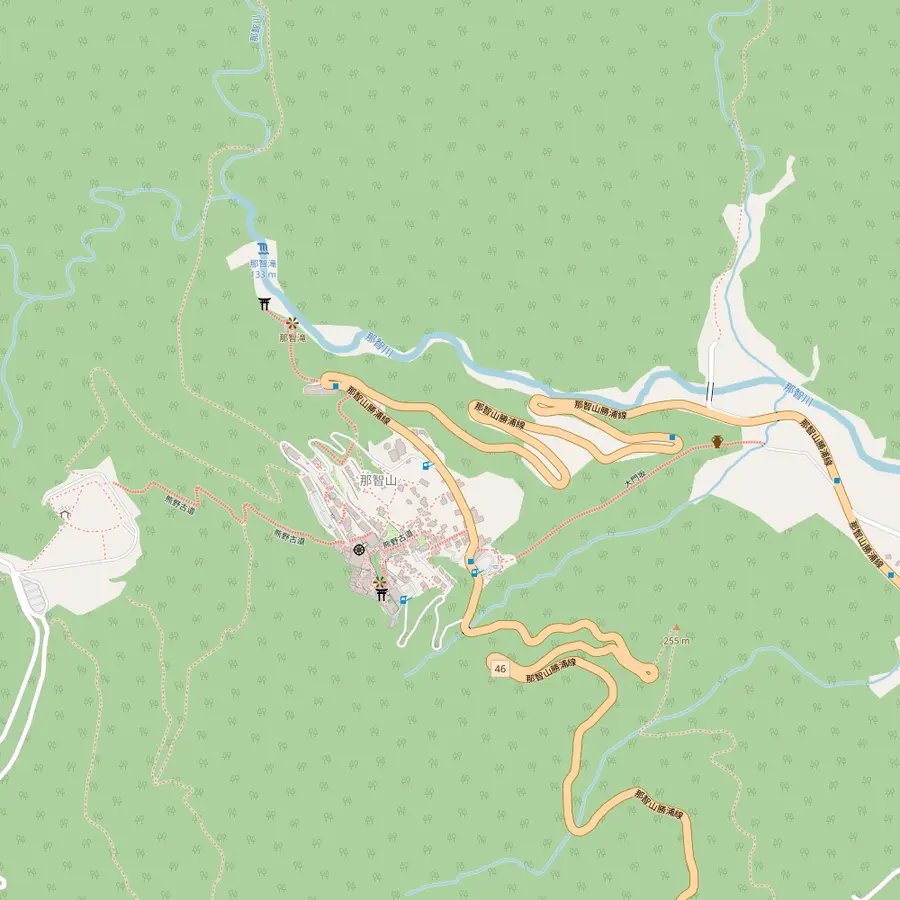 15Daimon-zaka16Seiganto-ji17Nachi Falls (Hiro-jinja)
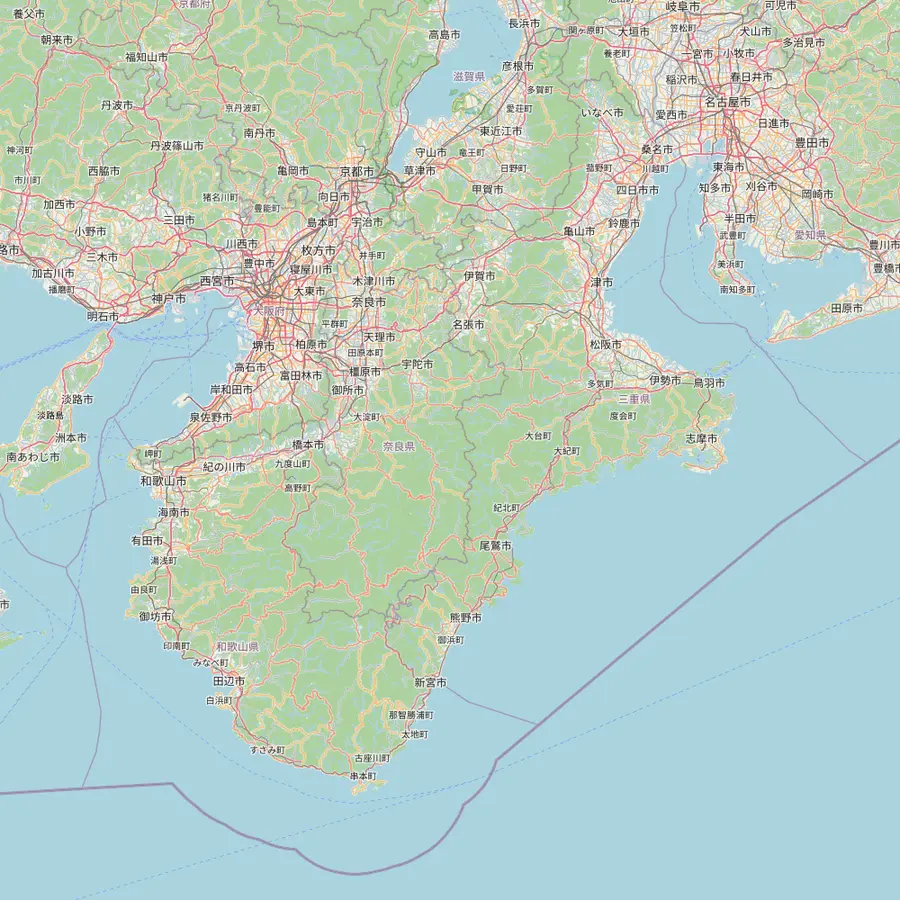 18Osaka (Shinsaibashi)19Kyoto20Koyasan21Kii-Tanabe22Shingu23Kii-Katsuura24Ise
- 1Takijiri-oji
The usual first day of a Nakahechi walk starts here, beside the Kumano Kodo Kan pilgrimage center.2930
In Google Maps ↗ - 2Takahara
A steep climb of about 4 km from Takijiri-oji, through native and planted forest.3132
In Google Maps ↗ - 3Chikatsuyu-oji
An old oji in a basin at about 300 m, at the end of the classic first day; the village has about 450 people.3334
In Google Maps ↗ - 4Tsugizakura-oji
Named for a grafted cherry; some of its cedars are 8 m round and thought to be up to 800 years old.35
In Google Maps ↗ - 5Hosshinmon-oji
Start of the popular 7 km half-day walk to Kumano Hongu Taisha; there is nowhere to stay here.3637
In Google Maps ↗ - 6Kumano Hongu Taisha
Head shrine of over 3,000 Kumano shrines across Japan; the grounds are free.23
In Google Maps ↗ - 7Koguchi
Overnight stop between the Kogumotori-goe and the Ogumotori-goe on the way to Nachi.3839
In Google Maps ↗ - 8Kumano Nachi Taisha
Halfway up Nachi Mountain at about 350 m, about 10 km inland from Katsuura.47
In Google Maps ↗ - 9Hayatama Taisha
At the mouth of the Kumano-gawa, where the river meets the Pacific.6
In Google Maps ↗ - 10Fushiogami-oji
Where pilgrims fell to their knees at their first sight of the grand shrine.40
In Google Maps ↗ - 11Oyunohara
The original shrine site on a sandbank, marked by a steel torii 33.9 m tall.1619
In Google Maps ↗ - 12Yunomine Onsen
A hot spring found about 1,800 years ago, with the Tsuboyu bath.4142
In Google Maps ↗ - 13Wataze Onsen
The largest open-air hot spring bath in western Japan.43
In Google Maps ↗ - 14Kawayu Onsen
Hot water rises through the river bed; in winter a huge river bath is dug.4445
In Google Maps ↗ - 15Daimon-zaka
About 600 m of stone stairs, 267 steps, under old cedars.2346
In Google Maps ↗ - 16Seiganto-ji
A Tendai temple and the first stop of the Saigoku pilgrimage to 33 Kannon.47
In Google Maps ↗ - 17Nachi Falls (Hiro-jinja)
133 m high, worshipped directly with no shrine hall.548
In Google Maps ↗ - 18Osaka (Shinsaibashi)
The day tour leaves from Q Plaza Shinsaibashi or the National Bunraku Theatre.
In Google Maps ↗ - 19Kyoto
The Kuroshio reaches Kii-Tanabe from Kyoto in 2 hrs 35 min.49
In Google Maps ↗ - 20Koyasan
Start of the Kohechi; reached from Namba on Nankai trains and a cable car.5051
In Google Maps ↗ - 21Kii-Tanabe
Gateway to the Nakahechi; trail buses leave from stop No. 2.5253
In Google Maps ↗ - 22Shingu
Home of Hayatama Taisha and a bus hub towards Hongu.654
In Google Maps ↗ - 23Kii-Katsuura
Buses climb to Nachisan in about 30 minutes.55
In Google Maps ↗ - 24Ise
Start of the Iseji, about 170 km along the east coast.56
In Google Maps ↗
Checklist
Visiting the Grand Shrines
01
Bring
- Coins and notes for offerings and fees
- A stamp book or credential
- Shoes for long stone stairs
02
Respect
- Quiet voices at the halls
- Two bows, two claps, one bow
- Photo signs at the main halls
Video
Japanese Tree Cave & Huge Waterfall (Kumano Nachi Taisha, 熊野那智大社) and Kumano Hayatama Taisha
The video loads only when you tap play.
Kumano Nachi Taisha and its waterfall
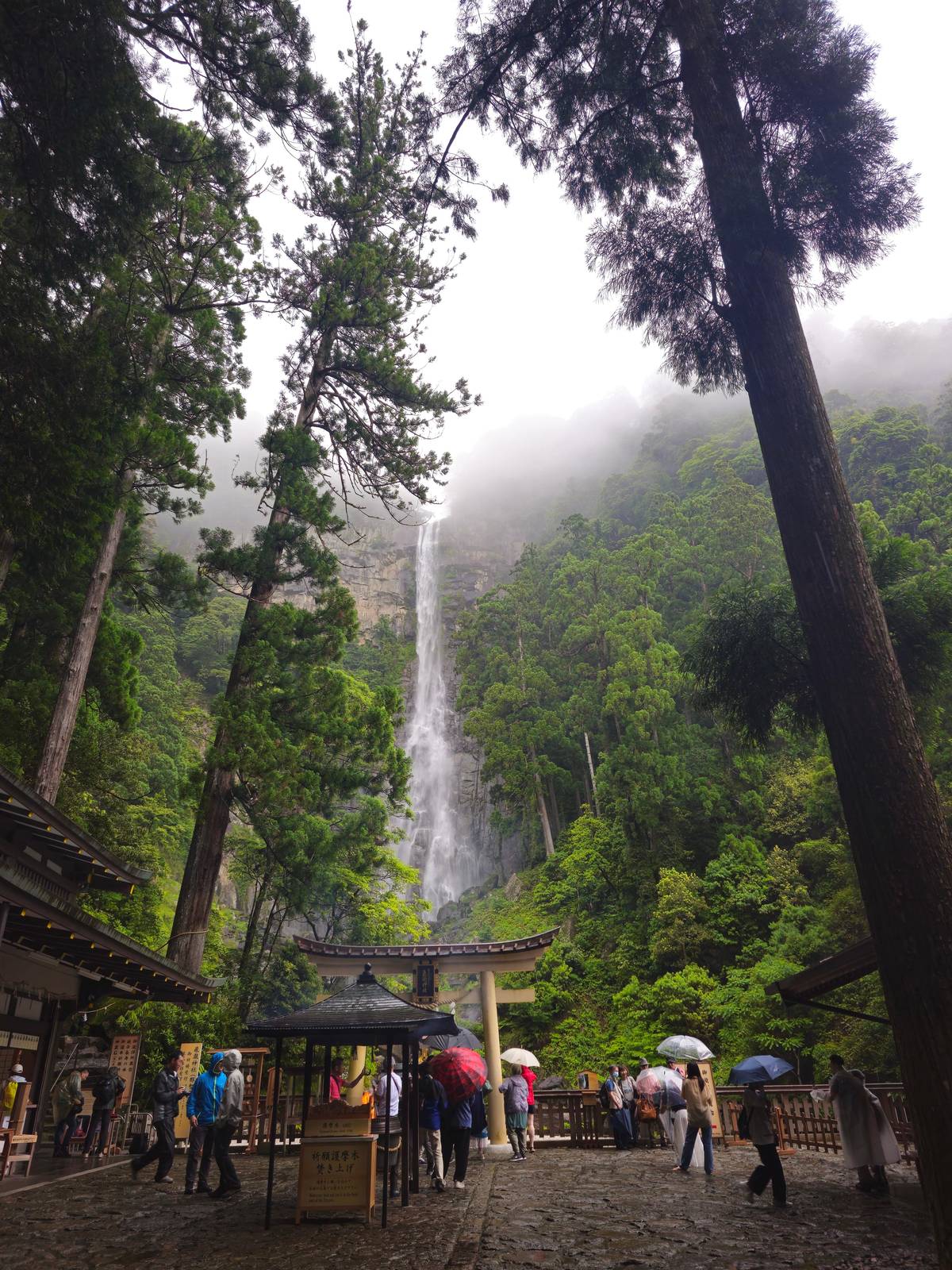
The Kumano Nachi Grand Shrine stands halfway up Nachi Mountain at about 350 m above sea level, and its origins lie in the worship of the waterfall itself.4 Most visitors climb to it on Daimon-zaka, a stone staircase of about 600 m with 267 steps.23 The grounds are free and the shrine office opens from 6:00 to 16:30.21
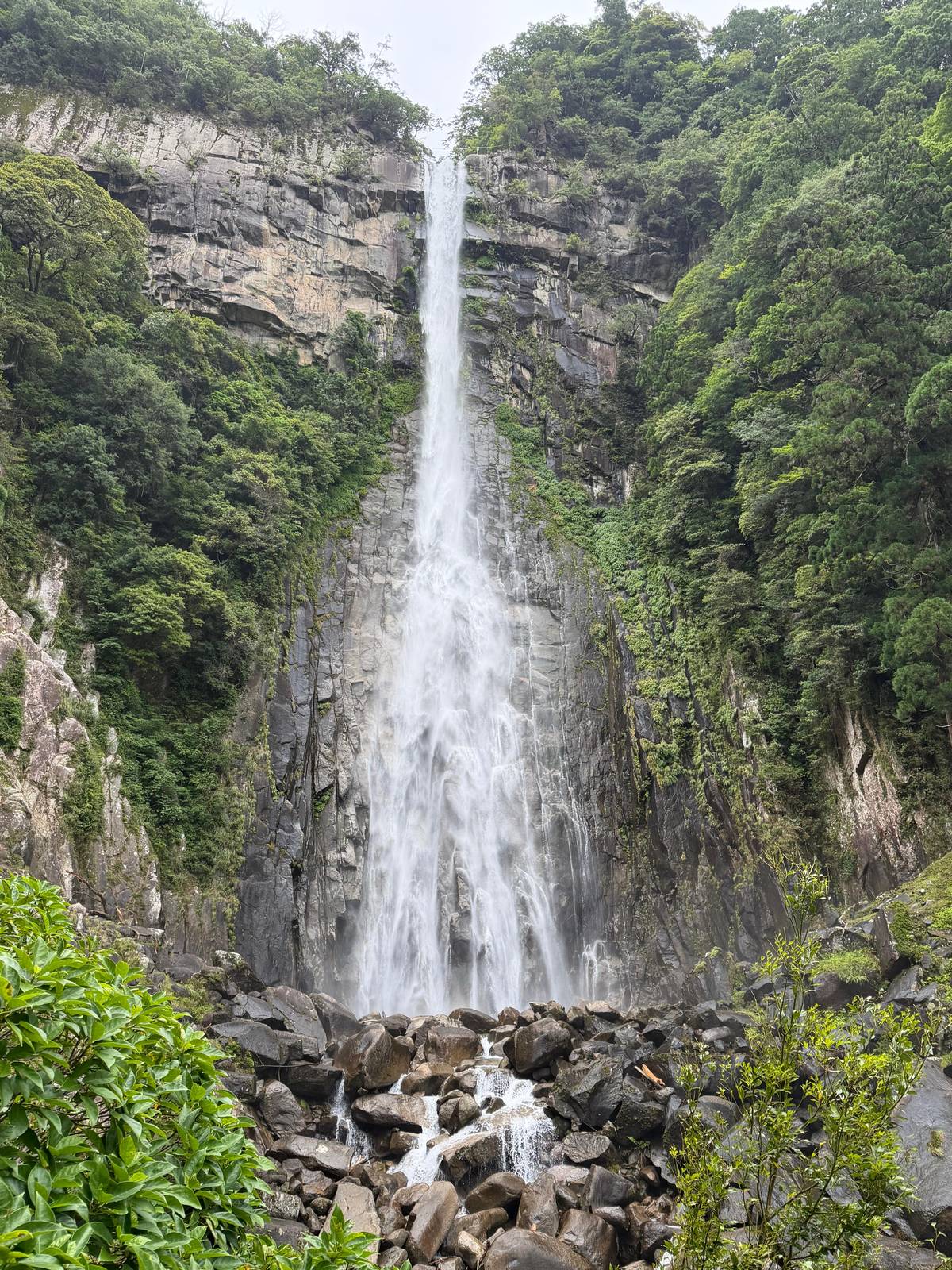
The fall, Nachi-no-Otaki, is 133 m high and 13 m wide, the tallest waterfall in Japan.5 The shrine adds that its plunge pool is 10 m deep and that about one tonne of water is said to fall every second.57 At Hiro-jinja, at the foot of the fall, there is no shrine hall at all: people bow directly to the water.48
A paid stage brings you closest to the fall, 500 yen for adults and 200 yen for school pupils, with preschool children free, as the shrine listed it in October 2026.58 Next door stands Seiganto-ji, a Tendai temple and the first of the 33 temples of the Saigoku Kannon pilgrimage, which began in 1161.47
Hayatama Taisha in Shingu
Hayatama Taisha stands at the mouth of the Kumano-gawa, where the water from the Kii Mountains meets the Pacific.6 Its vermilion buildings are the most colourful of the three, and the shrine's sacred Nagi tree is the thing most people photograph.
The age of that tree depends on who you ask. The tourism bureau calls it 800 years old.22 The shrine itself speaks of a tree about a thousand years old, the largest of its kind in Japan.59 Either way, it is one of the oldest living things you will meet on a Kumano trip.
Hayatama is preparing for a big date: the shrine will hold its 1,900th founding anniversary festival on 23 April 2028.14 Its regular calendar is lively too, with the Mifune Matsuri on 16 October, when nine boats race up the river, and the Oto Matsuri fire festival at Kamikura-jinja every 6 February.1310
The symbols you will see at every shrine
Look for a three-legged crow on banners, amulets and roof tiles. It is the Yatagarasu, believed to be the divine messenger that guided the first emperor through the Kumano Mountains.60 You will see it at all three shrines and on the double pilgrimage credential. Amulets with the crow are sold as protection for travellers, which makes them a popular souvenir for anyone about to set off on foot, and a quiet reminder of the guide in the legend when the trail climbs into cloud.
Small roadside shrines called oji line the routes that lead here. They are counted as the Ninety-nine Oji, a figure that means many rather than an exact number.61 Kumano Hongu Taisha writes that pilgrims walked some 300 km from Kyoto past them.24
Kumano also has a reputation for openness. The bureau notes that where other sacred sites in Japan barred women, Kumano welcomed everyone regardless of sect, class or gender.62 That spirit still shapes the place: you do not need to be a believer to visit, only respectful.
How to see all three shrines
On foot, the shrines are days apart. Walkers usually reach Hongu on the Nakahechi, cross the mountains to Nachi and take a bus to Shingu, or the other way round. By public transport alone, getting from Hongu to Nachi usually means two changes of bus, at Shingu and at Nachi Station, so Hayatama fits naturally on the way.63
If you have only one day, the coach tour from Osaka on this site covers all three. Its listed itinerary gives 50 minutes at Kumano Hongu Taisha and 2.33 hours at Nachi, including Seiganto-ji, Nachi Falls and a 20 to 40 minute walk on Daimon-zaka, before Hayatama. Entrance fees are included, and so is a stamp booklet for the shrine stamps.
If you would rather explore one shrine in depth with a local guide, short private visits exist for each of them, priced from $45 for Hayatama and Kamikura. They suit travellers already staying in the region. The comparison below shows the options side by side.
Your day in Kumano
Three shrines and the cedar steps in one day.
Pick a date, meet in central Osaka, and cancel free up to 24 hours before.


You ask,we answer.
What does Kumano Sanzan mean?
The three Grand Shrines. Kumano Hongu Taisha, Kumano Hayatama Taisha and Kumano Nachi Taisha together.1
Is there an entry fee at the shrines?
Not for the grounds. Hongu and Nachi grounds are free; the Hongu treasure hall is 300 yen for adults.32120
How tall is the giant torii at Oyunohara?
33.9 m tall. It is 42 m wide, made of steel and was put up in 2000 at the old shrine site.1918
How high is Nachi Falls?
133 m. It is 13 m wide, and the bureau calls it the tallest waterfall in Japan.5
When is the Hongu spring festival?
13 to 15 April. On the first day participants walk the Dainichi-goe from Yunomine Onsen.1211
Where do I get the completion stamp?
At Kumano Hongu Taisha. It is the stamp that marks the end of the Kumano Kodo pilgrimage.26
Can I visit all three shrines in one day?
Yes, on a coach day trip. The tour from Osaka on this site stops at Hongu, Nachi and Hayatama, with entrance fees included.
Sources
Sources and evidence
- 1Tanabe City Kumano Tourism BureauWorld Heritage: Sacred Sites and Pilgrimage Routes in the Kii Mountain Range (with the UNESCO descriptions)↩
- 2Tanabe City Kumano Tourism BureauKumano Hongu Taisha↩
- 3Tanabe City Kumano Tourism BureauKumano Hongu Taisha↩
- 4Tanabe City Kumano Tourism BureauKumano Nachi Taisha↩
- 5Tanabe City Kumano Tourism BureauKumano Nachi Taisha↩
- 6Tanabe City Kumano Tourism BureauKumano Hayatama Taisha↩
- 7Tanabe City Kumano Tourism BureauKumano Nachi Taisha↩
- 8Tanabe City Kumano Tourism BureauKumano-gawa River↩
- 9Tanabe City Kumano Tourism BureauWorld Heritage: Sacred Sites and Pilgrimage Routes in the Kii Mountain Range (with the UNESCO descriptions)↩
- 10Tanabe City Kumano Tourism BureauKumano Hayatama Taisha↩
- 11Tanabe City Kumano Tourism BureauDainichi-goe↩
- 12Tanabe City Kumano Tourism BureauKumano Hongu Taisha↩
- 13Tanabe City Kumano Tourism BureauKumano Hayatama Taisha↩
- 14Kumano Hayatama Taisha熊野信仰のはじまり (The beginnings of Kumano worship)↩
- 15Kumano Hongu TaishaEnglish - Kumano Hongu Taisha↩
- 16Tanabe City Kumano Tourism BureauKumano Hongu Taisha↩
- 17Tanabe City Kumano Tourism BureauKumano Hongu Taisha↩
- 18Tanabe City Kumano Tourism BureauKumano Hongu Taisha↩
- 19Tanabe City Kumano Tourism BureauKumano Hongu Taisha↩
- 20Tanabe City Kumano Tourism BureauKumano Hongu Taisha↩
- 21Tanabe City Kumano Tourism BureauKumano Nachi Taisha↩
- 22Tanabe City Kumano Tourism BureauKumano Hayatama Taisha↩
- 23Tanabe City Kumano Tourism BureauDaimon-zaka↩
- 24Kumano Hongu TaishaEnglish - Kumano Hongu Taisha↩
- 25Kumano Hongu TaishaEnglish - Kumano Hongu Taisha↩
- 26Tanabe City Kumano Tourism BureauDual Pilgrim↩
- 27Tanabe City Kumano Tourism BureauDual Pilgrim↩
- 28Tanabe City Kumano Tourism BureauDual Pilgrim↩
- 29Tanabe City Kumano Tourism BureauTakijiri-oji to Tsugizakura-oji↩
- 30Tanabe City Kumano Tourism BureauTakijiri-oji to Tsugizakura-oji↩
- 31Tanabe City Kumano Tourism BureauTakijiri-oji to Takahara↩
- 32Tanabe City Kumano Tourism BureauTakijiri-oji to Takahara↩
- 33Tanabe City Kumano Tourism BureauHistory & Oji↩
- 34Tanabe City Kumano Tourism BureauChikatsuyu↩
- 35Tanabe City Kumano Tourism BureauHistory & Oji↩
- 36Tanabe City Kumano Tourism BureauTsugizakura-oji to Kumano Hongu Taisha↩
- 37Tanabe City Kumano Tourism BureauHosshinmon-oji to Kumano Hongu Taisha↩
- 38Tanabe City Kumano Tourism BureauSuggested Walks↩
- 39Tanabe City Kumano Tourism BureauSuggested Walks↩
- 40Tanabe City Kumano Tourism BureauHosshinmon-oji to Kumano Hongu Taisha↩
- 41Tanabe City Kumano Tourism BureauYunomine Onsen↩
- 42Tanabe City Kumano Tourism BureauYunomine Onsen↩
- 43Tanabe City Kumano Tourism BureauWataze/Watarase Onsen↩
- 44Tanabe City Kumano Tourism BureauKawayu Onsen↩
- 45Tanabe City Kumano Tourism BureauKawayu Onsen↩
- 46Tanabe City Kumano Tourism BureauDaimon-zaka↩
- 47Tanabe City Kumano Tourism BureauKumano Nachi Taisha↩
- 48Kumano Nachi Taisha飛瀧神社(那智御瀧) (Hiro-jinja, Nachi Falls)↩
- 49Tanabe City Kumano Tourism BureauTransport: Train↩
- 50Tanabe City Kumano Tourism BureauKohechi↩
- 51Tanabe City Kumano Tourism BureauTransport: Train↩
- 52Tanabe City Kumano Tourism BureauKumano Kodo↩
- 53Tanabe City Kumano Tourism BureauTanabe↩
- 54Tanabe City Kumano Tourism BureauTransport: Bus↩
- 55Kumano Nachi Taishaアクセス (Access)↩
- 56Tanabe City Kumano Tourism BureauIseji↩
- 57Kumano Nachi Taisha飛瀧神社(那智御瀧) (Hiro-jinja, Nachi Falls)↩
- 58Kumano Nachi Taisha飛瀧神社(那智御瀧) (Hiro-jinja, Nachi Falls)↩
- 59Kumano Hayatama Taisha熊野信仰のはじまり (The beginnings of Kumano worship)↩
- 60Tanabe City Kumano Tourism BureauWorld Heritage: Sacred Sites and Pilgrimage Routes in the Kii Mountain Range (with the UNESCO descriptions)↩
- 61Tanabe City Kumano Tourism BureauHistory & Oji↩
- 62Tanabe City Kumano Tourism BureauHistory & Oji↩
- 63Tanabe City Kumano Tourism BureauTransport: Bus↩